
By Kate Chappell, 2025-2026 Research Collaborator at Power in Place
When I first started researching Laura Cornelius Kellogg three months ago for Power In Place, I had never heard of her. As I’ve worked on my research project and immersed myself in the story of this woman who is seldom taught or thought about in current times, I’ve thought about why this incredible and complex woman is often overlooked or not often studied, as well as what I have come to wish more people knew about her. Laura “Wynnogene” Cornelius Kellogg is a historical figure who presents a complex legacy; as we in the present look back on her life, we see a deeply intelligent woman who devoted herself to writing and the betterment of her community, but also a derisive person who ultimately quit public activism and died away from the public eye. Kellogg grew up in Wisconsin as a member of the Oneida Nation, a people who originally lived in New York state but were relocated to north-eastern Wisconsin in 1822. This forced move of the Nation was not far removed from Kellogg’s lifetime, as her maternal grandfather, Daniel Bread or “Great Eagle”, was the Oneida leader during the time when the tribe left their ancestral homeland in New York and resettled in Wisconsin. No doubt this shaky history of displacement and resettlement haunted Laura’s childhood, just as much as it influenced her grandparents and parents before her. The feeling of being without a proper home, or having one’s home taken away, surely had a deep effect on Kellogg and influenced her throughout her life. Laura Cornelius Kellogg also defies any easy classification. Kellogg can be somewhat classified as a “suffragette” but did not align herself with contemporary suffragette movements in her lifetime, being that Native American women already had the right to be involved in tribal politics and always had. She is often classified as an Indigenous rights activist, which is certainly true; but even then, Kellogg has a contemptuous legacy within Native American politics due to the failure of her Lolomi plan to return land back to Indigenous peoples. She is not quite the suffragist that modern people would want her to be, and she did not live up to all that Indigenous communities needed an activist to be in her lifetime. When I think of what I want people to know about Laura Cornelisu Kellogg, I think about duty. Her family genealogy was rooted in Oneida leadership, both her mother and father being children to great Nation leaders. Kellogg’s duty, then, was to carry on the family legacy. This gave her a lot of power; she was able to escape the fate of being educated at an Indian boarding school and instead graduated with honors from Grafton High School in Fond du lac, Wisconsin in 1898. She spoke not only English, but also two Indigenous languages and was the first to write an English dictionary of the Oneida language, as well as having studied classical Latin and Greek. Kellogg hopped across many different universities across the United States, from New York City to California, and traveled to Europe as a young lady where the people nicknamed her “Princess Neoskalita”. I think Laura Cornelius Kellogg knew that to fulfill her duty to her people, she needed to be educated across many different disciplines and experience more of the world than just northern Wisconsin. Kellogg understood that her duty was first to educate herself - and then to make her education and experiences of some value to the people she left back home. I wish more people knew just how ahead of her time Kellogg was. Her Lolomi plan to legally reclaim Indigenous land was a headfirst dive into Indigenous sovereignty and self-determinism that would be radical even today. Kellogg didn’t just write about this plan - she lived it. She brought her cases to court, fundraised for the money, devoted the best years of her life to writing about, educating on, and fighting these battles with her husband and the people closest to her. She was arrested for such efforts twice, in Oklahoma and Colorado. Ultimately, her legal cases never amounted to anything, and she was accused of fraud and held in contempt by those she had fundraised money from to help her work. She was divisive in her forwardness, which cost her membership in the Society of American Indians, an organization she helped create, and she lost the respect of many others along her journey towards what ultimately became her biggest failure. I believe this is part of why Kellogg is not a very well-known historical figure; she can be pigeon-holed into the category of “failure,” someone the history textbooks would rather skip over, or someone people find to be less important. However, I do not believe that her Lolomi plan or legal battles were complete failures. Her plan to return land back to Indigenous peoples through legal actions is not complete, however, today the Oneida tribe has control over 18,000 acres of their original land. Laura Cornelius Kellogg was a step towards this slow, continuous struggle. When we talk about Land Back and indigenous self-determination today, Kellogg is one of the many extraordinary people who paved the way for these discussions to even happen. These are the things I wish more people knew about Laura Cornelius Kellogg - not that she “failed” or that her ideas never came to fruition in the way that she intended, but that she along with so many other Indigenous figures in the long history of colonialism and the creation of the United States contributed to immensely important ideas that outlasted them and have motivated and invigorated the new generations of activists today.
References
[1] “History – Oneida Indian Nation.” Oneida Indian Nation, www.oneidaindiannation.com/history/. [2] Anne Waters. “Kellogg, Laura Miriam Cornelius (1880–c.1949).” The Dictionary of Modern American Philosophers. Continuum, 2005. [3] Hauptman, Laurence M. “Kellogg, Laura Minnie Cornelius.” American National Biography Online. Oxford University Press, 2000. https://doi.org/10.1093/anb/9780198606697.article.2001384. [4] Kellogg, Laura Cornelius, Cristina Margareta Stanciu, and Kristina Ackley. Laura Cornelius Kellogg : Our Democracy and the American Indian and Other Works. First edition. Syracuse, New York: Syracuse University Press, 2015.
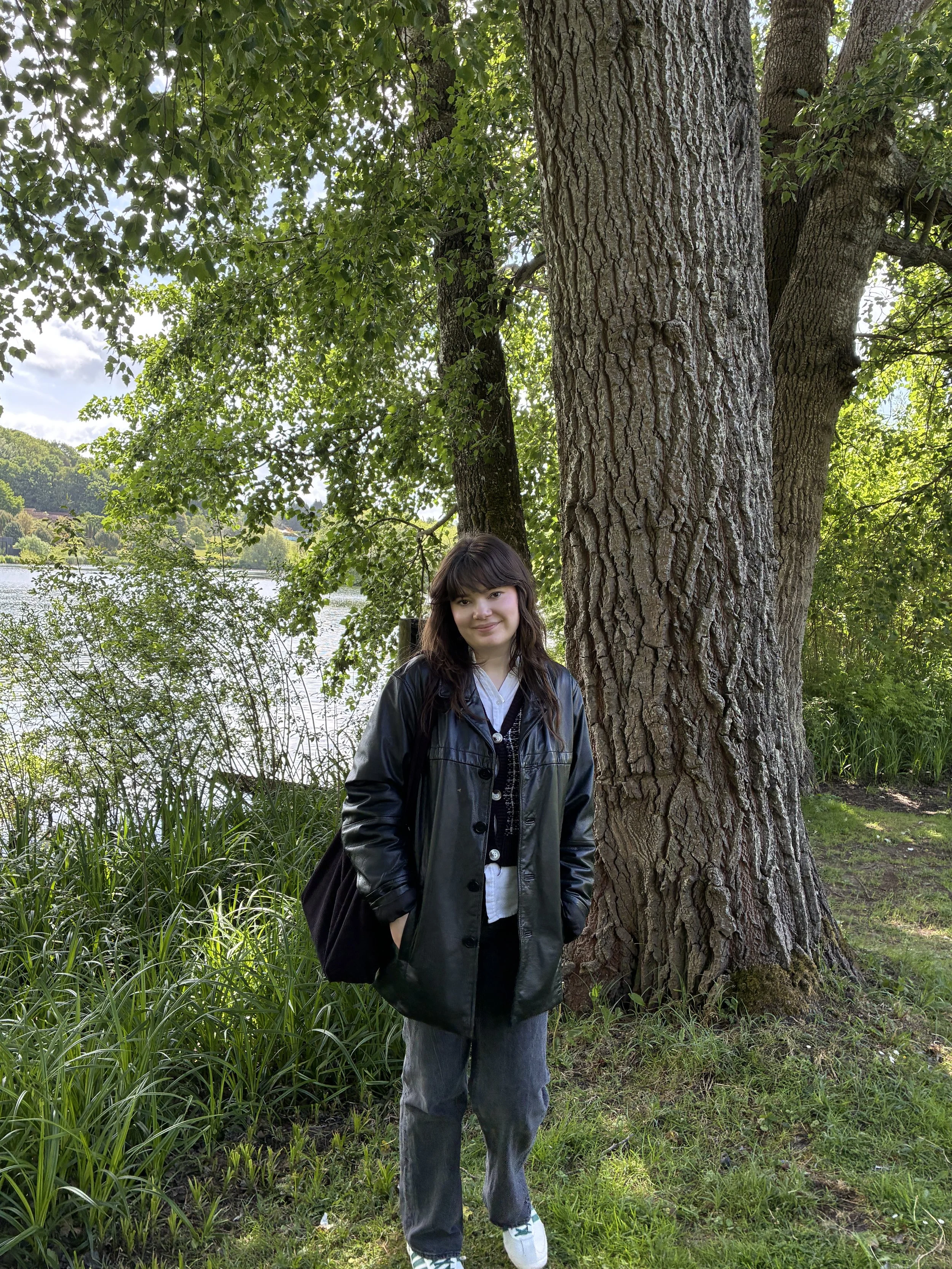
Kate Chappell is a senior at Loyola University Chicago studying English and Political Science with a minor in German Studies. She is passionate about writing, poetry, and politics. Her favorite class at university so far has been Constitutional Law and one of her favorite college memories was studying abroad for a summer in Berlin, Germany.