
By Amaiyah Korf ,2025-2026 Research Collaborator at Power in Place
Like any college student today, I often grapple with the question: “How can I make a positive impact in the world?” Especially now, in times of heightened uncertainty and negative narratives being amplified, it can be challenging for young students to find their voice. I knew I had always wanted to utilize my abilities and education to amplify and support the voices of the most disadvantaged but overlooked communities. When I joined Power in Place as an associate researcher, I was thrilled to start working on projects that uplifted and amplified the voices of women of color who fought for women's rights, yet whose voices had been buried in the haystack of history. As a researcher for Power in Place, I had the exciting opportunity to research Frances Barrier Williams, an accomplished orator and political advocate who championed the advancement of women and African Americans during her time as an activist in the late 19th and early 20th centuries. Frances (Fannie) E. Barrier Williams achieved many accomplishments throughout her life, including co-founding the NAACP and earning the honor of being the only black woman to eulogize the late suffragist Susan B. Anthony. Yet it wasn’t until Mrs. Williams faced extreme hardship and worked tirelessly that she accomplished her goals and helped improve the lives of millions of African Americans throughout the United States, an observation I found oddly reassuring. Frances Barrier Williams' story is not unique, but it is inspiring. She, like so many women, has continuously had to pave a path towards progress despite their own struggles. And this is the case we see repeatedly: black women, the ones most often hurt by politics, are constantly the ones we see organizing their communities for the greater good. It has historically occurred in the suffragist and civil rights movements, and more recently, in 2020, when black women like Stacy Abrams in Georgia and Brittany Smalls in Philadelphia were credited with rallying a majority of the black population to vote, which helped Joe Biden win in crucial states. We saw it again in 2024 when 92% of black women voted for Kamala Harris (The Guardian). Throughout history, Black women have consistently been advocates for the progress of others, because, unfortunately, we know that no one is advocating for us except ourselves. Williams lived within the same barriers we still do 150 years later, yet in a world that was constantly trying to minimize and dismiss her because of what, not who, she was, Frances realized the barbarity of it and never let outdated ideas prevent her from working to help her communities. Today, I often find myself tired and discouraged by our political progress. Watching these past few years, as what I thought the founding principles of our country have become more precarious, is scary and uncertain as a black woman myself. When I think of women like Frances Barrier Williams, I think of how she knew she wouldn’t be around to see the fruits of their labor yet still pushed for the progress of future generations. For me. When you think of it that way, it feels incredibly intimate. Knowing that I am some women in history’s wildest dreams, that I am who they fought and walked so long for, keeps my fire for politics and community organization alive. These ladies' stories have not only inspired me but also taught me a valuable lesson. Researching the methods women used for grassroots organization, community involvement, and leadership provides a step-by-step guide on how to connect better with your community and how to engage them in critical social and political issues. It helped me realize that the most effective way I can make a positive impact in politics is through individual collaboration and education. I know I can’t end world hunger or for-profit prisons, but I can feed my neighbor and look out for my community. That is what Frances Barrier Williams and this Time Capsule Project are about; it’s not the significant achievements in our lives that will live on, but rather the way we impacted our community and helped advance and better the lives of those around us. Those are the things that matter most, and that will have a lasting impact on the world after we are gone. Now, I know that is how I can make a positive impact in the world.
References
The Guardian 2024: https://www.theguardian.com/us-news/2024/dec/04/black-women-harris-election-loss
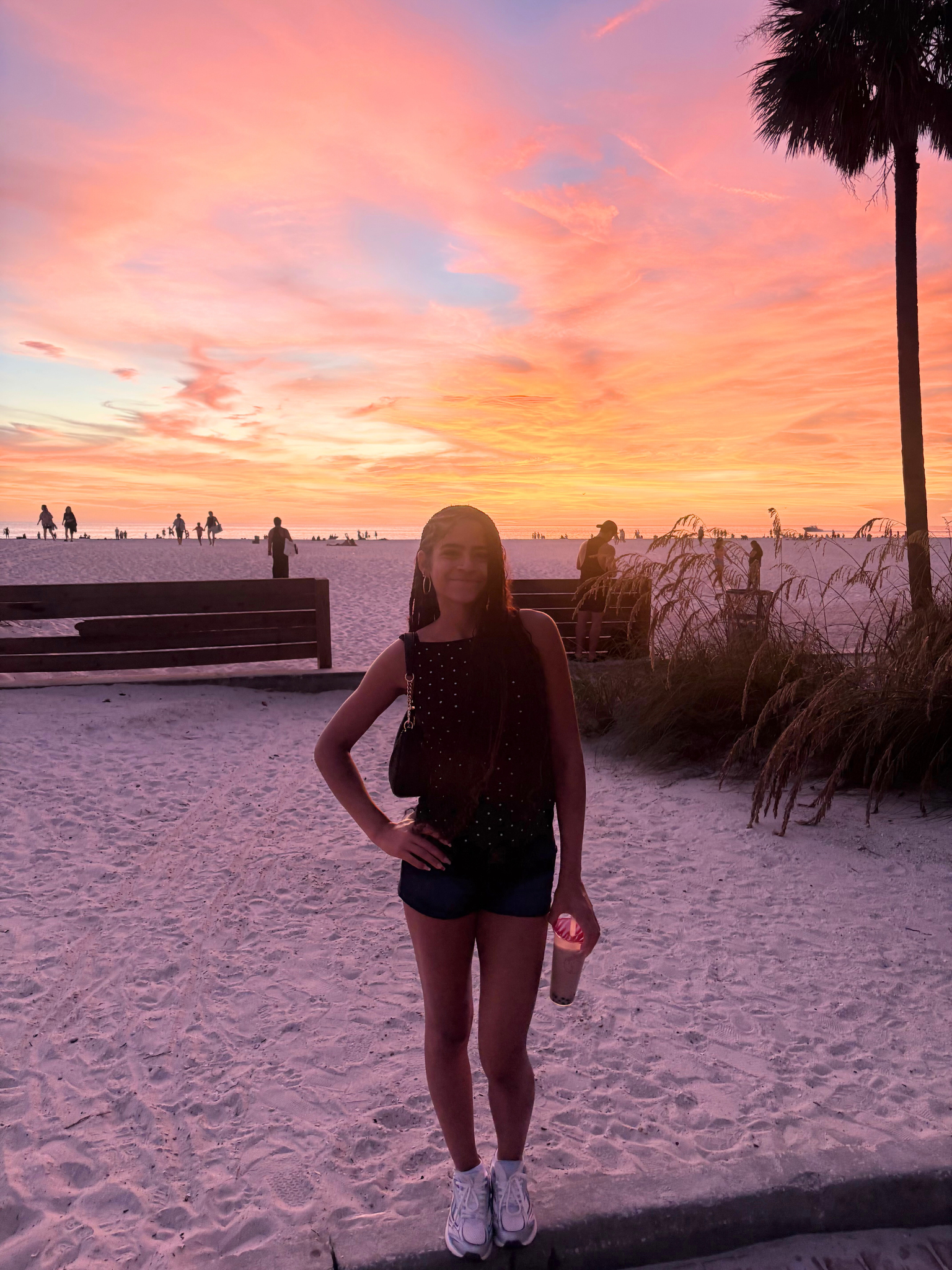
Amaiyah Korf is a second-year student majoring in political science and economics at the University of Northern Iowa, minoring in legal studies and Spanish, and is on the pre-law track. Aside from her interests in politics, she co-heads her school's Film Club and enjoys spending time outdoors. After college, Amaiyah hopes to get involved in the legal or political world to help build a more equitable, democratic, and kinder world.