
By Abigail Lara, 2025-2026 Research Collaborator at Power in Place
We often celebrate large-scale change, forgetting that it frequently begins at the local level. For Mary McLeod Bethune, this sentiment manifested itself in her early beginnings. As a child, she was chosen to attend the Trinity Presbyterian Mission School in Mayesville, South Carolina, walking a ten-mile round trip each day and becoming the first in her family to obtain a formal education. However, instead of locking her newfound knowledge in a vault and concealing it from the local youth, she would come home from school and gather the other plantation children, sharing her learnings and appetite for discovery and emphasizing her early desire for progress and growth within the African-American community. Eventually, those seemingly small steps towards changemaking planted the seed for the activist we know today, whose revolutionary efforts to educate young Black women paved the way for their incorporation in government positions, and inspired present-day women to pioneer inclusivity and leadership within their own communities. Bethune’s Historical Work Although Mary McLeod Bethune is regarded as one of the most influential educators in American history, she was also a political activist whose commitment to education helped augment civic participation and political empowerment for Black women. By founding a school for African-American girls, she provided young women with opportunities that had long been denied to them. Education has historically been associated with power, knowledge, and freedom—associations that motivated white Americans to restrict literacy among enslaved and free Southern African Americans, fearing that education would enable them to understand the law and claim their rights. Bethune’s determination to make education a dream within reach empowered Southern Black women and paved the way for their increased political visibility. In 1904, Bethune founded the Daytona Educational and Industrial Training School for Negro Girls in Daytona Beach, Florida. What began with only a few students eventually merged with the Cookman Institute to become Bethune-Cookman College, making her the first woman to establish and lead a major university for African-Americans and setting a precedent for what would later be recognized as Historically Black Colleges and Universities or HBCUs. Her influence extended beyond the classroom when President Franklin D. Roosevelt appointed her Director of Negro Affairs for the National Youth Administration, where she served as an important advisor advocating for Black inclusion in New Deal programs and federal employment. In 1935, she further expanded Black women’s political engagement by founding the National Council of Negro Women, uniting dozens of organizations to amplify their voices on issues such as education, employment, and civil rights. Much like many other underrepresented minorities in politics, however, her work was met by many trials and tribulations, particularly when the Ku Klux Klan threatened to destroy her school. Yet, despite this dangerous obstacle, Bethune persisted in her dedication to her community, confronting the KKK and remaining undaunted. Her bravery and willingness to share her kindness with the world earned her various awards, like the Thomas Jefferson Award for Leadership in 1942 and the Order of the Star of Africa in 1952. However, Bethune’s mission was so impactful that not only did it aid in the full enfranchisement and education of Black women, but it also served to inspire and motivate many women today to follow in her footsteps. Her Legacy in Modern Leadership Bethune’s commitment to education was not just evident in her actions but also in her words, which she framed as advice for future generations. In her piece “My Last Will and Testament,” Bethune wrote, “The world around us really belongs to youth for youth will take over its future management. Our children must never lose their zeal for building a better world. They must not be discouraged from aspiring toward greatness, for they are to be the leaders of tomorrow.”
Her emphasis on the potential for greatness in future generations can be traced to many modern politicians, but one in particular truly stands out as a living reflection of Bethune’s ambitions: Miami-Dade Public Schools District 9 Board member, Luisa Santos. Santos immigrated to the United States as a child with her family and was initially unable to pursue a university education because of her immigration status. Despite excelling academically and being highly involved in high school, Santos attended Miami-Dade College, a local community college, as it was the only institution that would accept her while she was undocumented. Eventually, she became a permanent Florida resident and transferred to Georgetown University to complete her Bachelor’s in political economy, later becoming a U.S. citizen. Like Bethune, Santos faced educational restrictions because of her background, but ultimately overcame them and went on to foster meaningful change within her community. Santos advocates for equitable resources and policies as a Miami-Dade School Board member. In 2020, she proposed the facilitation of post-secondary resources for undocumented students and mixed-status families by offering professional development and resources to College Assistance Program (CAP) Advisors and providing guidance documents in multiple formats and languages for students seeking assistance. Similar to Bethune, she aimed to expand educational opportunities for marginalized groups who lacked the resources necessary to progress in professional and academic fields. Given these similarities, it is safe to declare Santos a spiritual descendant of Mary McLeod Bethune, a woman who, in her time, battled against multiple hindrances to equality, and whose legacy Santos strives to uphold through her similarly brave policies, beliefs, and involvement in currently underrepresented communities in Miami. Conclusion Mary McLeod Bethune’s selfless work as an educator and philanthropist still beats in the hearts of modern politicians like Luisa Santos, who possess a similar mission to provide a voice to those who once felt voiceless. While it is essential to recognize the efforts of these remarkable women, it is equally important to consider the perspective of those shaped by their passionate actions. Their work is not simply equated with policy, awards, or historical recognition; it is constantly reflected in the individuals who were inspired to believe that their voices, too, deserve to be heard.
As someone who, like Santos, immigrated to the United States and faced many social and educational limitations due to the presence of a significant language barrier, I feel deeply connected to these two women who have gone down in history as defenders of those who could not afford soldiers. I not only felt like an outcast in the cafeteria when I could not understand a classmate’s punchline, but I also doubted my abilities when I couldn’t grasp lectures in an unfamiliar language or understand a foreign education system in a country far from my own. When it came time to apply for college, I felt limited in my resources and noticed the discrepancy between my knowledgeable classmates and my sense of disorientation. However, Bethune and Santos’ intrepid nature and aptitude to see beyond their own misfortunes and adversities inspired me to act and help build a better future rather than sulk in the present. I now volunteer as an advising fellow for Matriculate, helping high-achieving low-income students navigate the college application process with ease and comfort, knowing that they possess the resources necessary to succeed Ultimately, Mary McLeod Bethune’s legacy is not confined to the institutions she built or the positions she held, but to the individuals who choose to act upon the values she championed. People like Luisa Santos exemplify how Bethune’s belief in education and representation continues to move generations. In choosing action over silence, both women demonstrate that history exists to create precedents, not simply to reminisce or admire. Santos and Bethune are two women in a long chain of individuals who will carry their message forward and collectively create a better, more breathable future for all.
References
Adam Foreman, “The Extraordinary Life of Mary McLeod Bethune,” The National WWII Museum, https://www.nationalww2museum.org/war/articles/mary-mcleod-bethune “Mary McLeod Bethune (U.S. National Park Service),” n.d. https://www.nps.gov/people/mary-mcleod-bethune.htm Moorer, Vanessa. 2022. “Mary McLeod Bethune: ‘First Lady of Negro America.’” National Museum of African American History and Culture. July 15, 2022. https://nmaahc.si.edu/explore/stories/mary-mcleod-bethune. Zinn Education Project. “Fall, 1922: Mary McLeod Bethune Confronts Klan to Defend Black Voting Rights,” September 26, 2023. https://www.zinnedproject.org/news/tdih/mary-mcleod-bethune-confronts-klan/. WESH 2 News. “Mary McCleod Bethune Radio Show Interview,” July 14, 2022. https://www.youtube.com/watch?v=PBnAxKSxXsg “Dr. Bethune’s Last Will & Testament,” n.d. https://www.cookman.edu/history/last-will-testament.html NCNW. “About - NCNW,” July 10, 2025. https://ncnw.org/about-us/. Archives of Women’s Political Communication. “Mary McLeod Bethune -,” n.d. https://awpc.cattcenter.iastate.edu/directory/mary-m-bethune/. Rick. “Mary McLeod Bethune: Educator & Activist.” Orange County Regional History Center, October 5, 2020. https://www.thehistorycenter.org/mcleod-bethune Santos, Luisa and Miami-Dade County Public Schools. “POST-SECONDARY RESOURCES FOR UNDOCUMENTED STUDENTS AND MIXED STATUS FAMILIES,” 2020. Ospina, Andres. “Luisa Santos, Her History— Resilient and Committed to Her Goals.” Go! Latino Magazine, July 20, 2020. https://golatinos.net/luisa-santos-her-history-resilient-and-committed-to-her-goals
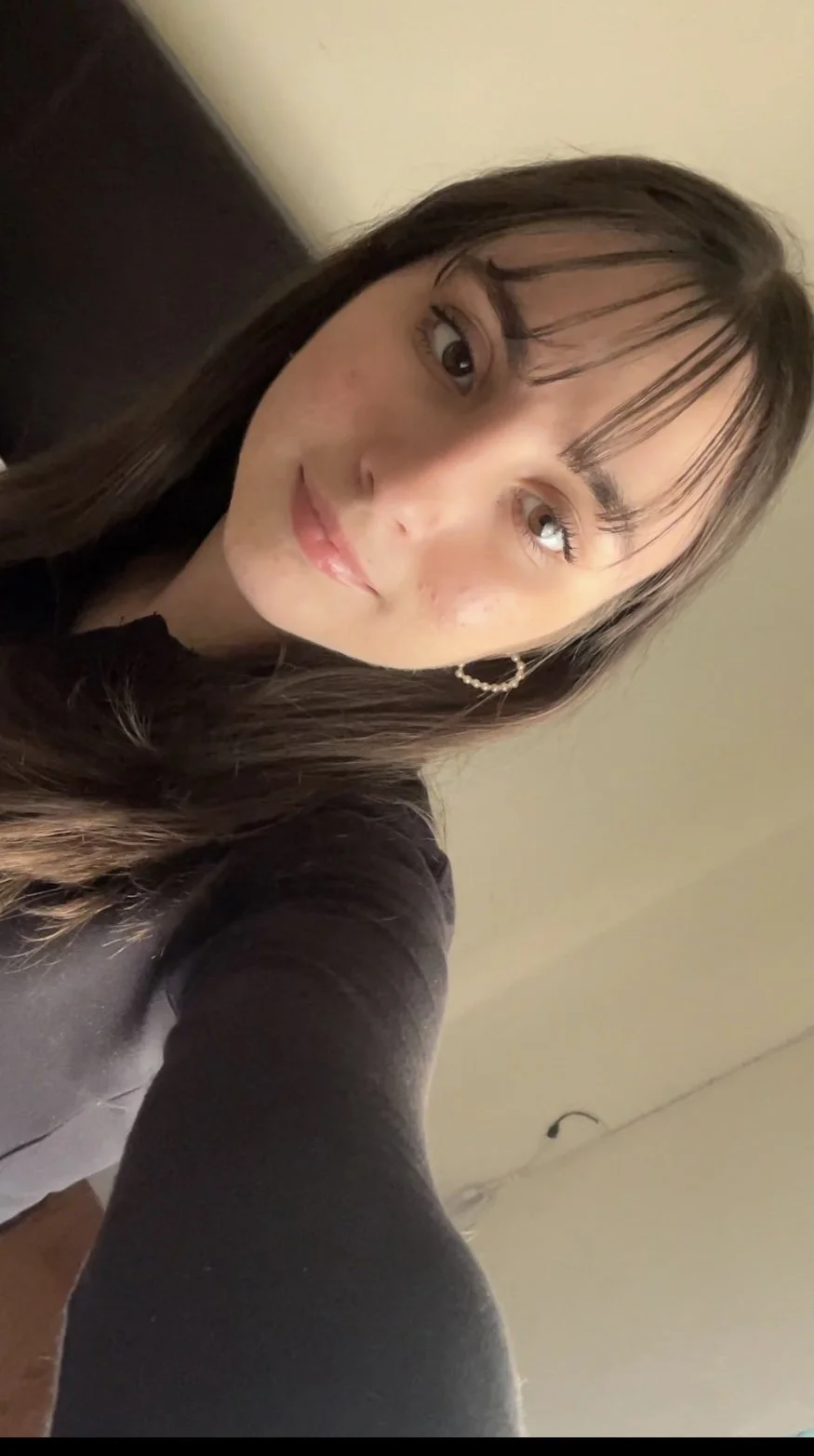
Abigail Lara is a freshman at the University of Miami, majoring in international studies and economics with a minor in French. She aims to attend law school after graduating to pursue her dream of becoming an international lawyer and working with the United Nations. She is also open to obtaining a Ph.D. and becoming a history professor in the future. In her free time, she enjoys playing the guitar and piano and watching travel vlogs with her dad, with whom she shares an adventurous spirit and a passion for exploring new cultures and discovering the world.