
By Srisha Nannapaneni, 2025/2026 Power in Place Research Collaborator
In 1903, Maggie Lena Walker led the founding of the St. Luke Penny Savings Bank, becoming the first African American woman to be president of a bank in the United States. This is the legacy she is best remembered for—as a pioneer for women in the banking industry, she pushed for women’s financial independence and successfully led her bank for over twenty years. Yet in her lifetime, she also advocated for racial equality, voting rights for women, and education for young women. Walker’s story is nothing short of extraordinary. Born in Richmond and raised for much of her childhood by a single mother, she later described herself as having been born with a “clothes basket almost upon [her] head.” She had no formal education past high school, and her experience in the financial sector was limited to her time observing the procedures of the white-owned Merchants National Bank. But she had a vision of a bank that encouraged economic independence for African Americans, and she was determined to see it through, despite the racial and gender discrimination she faced. Walker joined the Independent Order of Saint Luke, an African American organization focused on helping the community, when she was just 14. By the time she turned 17, she was an elected officer. Before founding the St. Luke Penny Savings Bank in 1903, she chaired the organization's Juvenile Department, started its weekly newspaper that promoted universal suffrage, and held its highest executive officer position. The chartering of her bank may have been the pinnacle of her success, but it was far from the only contribution she made to her community. She founded the Richmond Council of Colored Women in 1912, raising money for the Virginia Industrial School for Colored Girls. She cofounded the Richmond chapter of the NAACP in 1917. She helped raise funds for the Piedmont Sanitarium, the first state facility to treat African Americans with tuberculosis. After the passage of the 19th Amendment in 1920, she led education sessions and voter registration campaigns directed at African American women. In 1921, she became the first African American woman to run for state office in Virginia, joining an all-Black ticket as the candidate for Superintendent of Public Instruction in response to the all-white ticket put forth by the Republican party. The impact Maggie Lena Walker had cannot be overstated. Her work left a lasting legacy, inspiring people not only in her direct community, but across the country as her story spread. What began as a young girl’s desire to help those around her grew into a lifelong fight for the causes she believed in, whether that was financial independence or the right to vote. Her story is proof that nowhere is too small to start, and that all we need to make a lasting impact is a willingness to do good. As Walker said: “Somebody must speak. Somebody must cry aloud.” Only by raising our voices and standing together can we achieve meaningful progress and work towards making the world a better place.
References
“Maggie Lena Draper Mitchell Walker.” Directory of Virginia Biography. Library of Virginia, published 2020, revised 2023. https://old.lva.virginia.gov/public/dvb/bio.asp?b=Walker_Maggie_Lena “Maggie Lena Walker, c. 1926-1930, Photographer Scurlock.” National Park Service. https://www.nps.gov/media/photo/gallery-item.htm?pg=3565365&id=20ae843c-155d-451f-677a-36d67674b501&gid=FCD94BC0-5C32-4072-9B74-78E4A7D7ED02 “Memorable Quotes from Maggie L. Walker.” National Park Service, revised September 17, 2025.
https://www.nps.gov/mawa/learn/historyculture/memorable-quotes-from-maggie-l-walker.htm “The St. Luke Penny Savings Bank.” National Park Service. Accessed January 21, 2026. https://www.nps.gov/mawa/the-st-luke-penny-savings-bank.htm?scid=4yDZ5aAgRwj
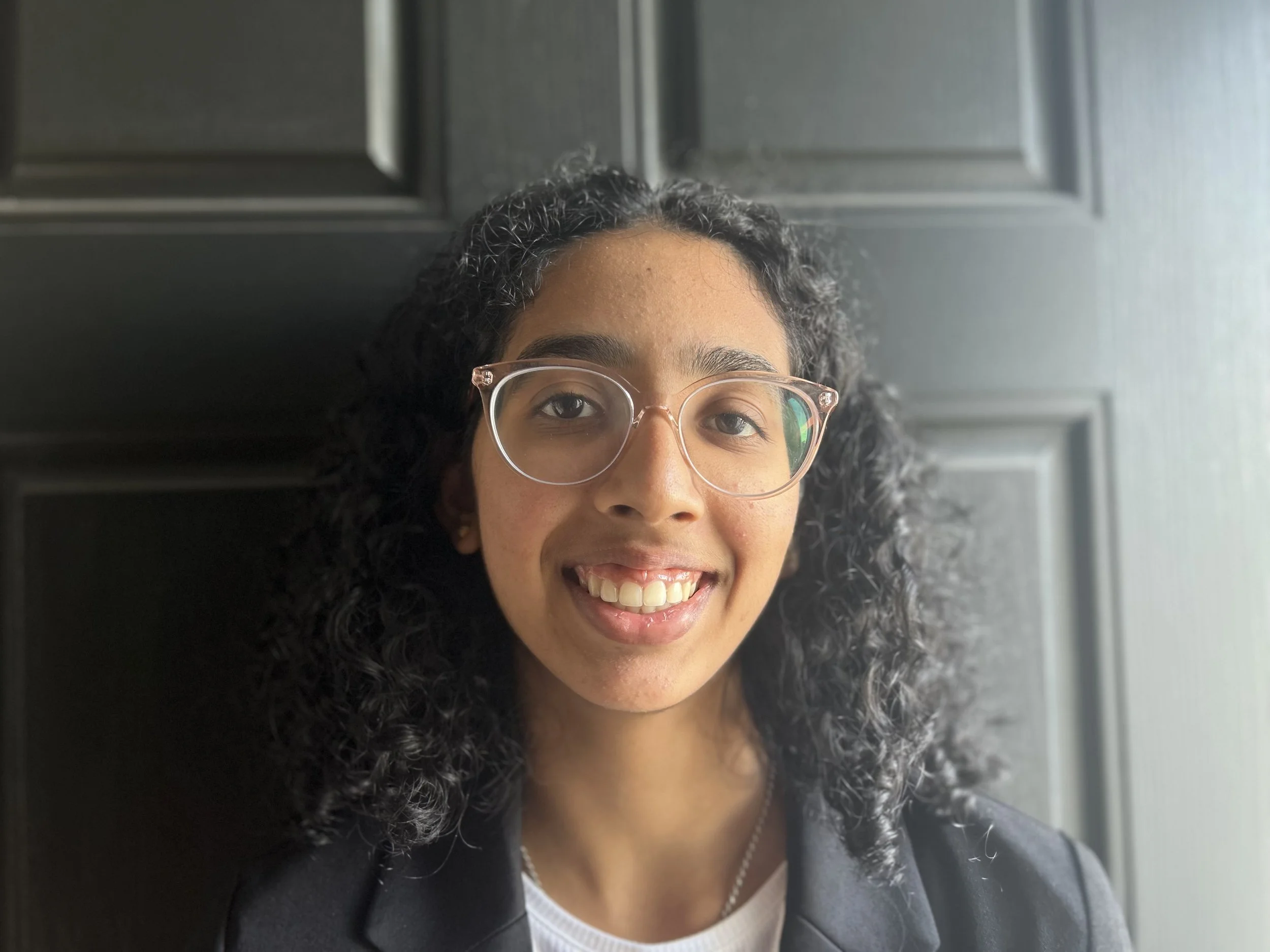
Srisha Nannapaneni is a first-year at the University of Virginia. She is still undecided about her major, but she is passionate about social justice and public policy. In her spare time, Srisha enjoys reading, baking, and going on long walks.