Hallie Quinn Brown to Ayanna Pressley

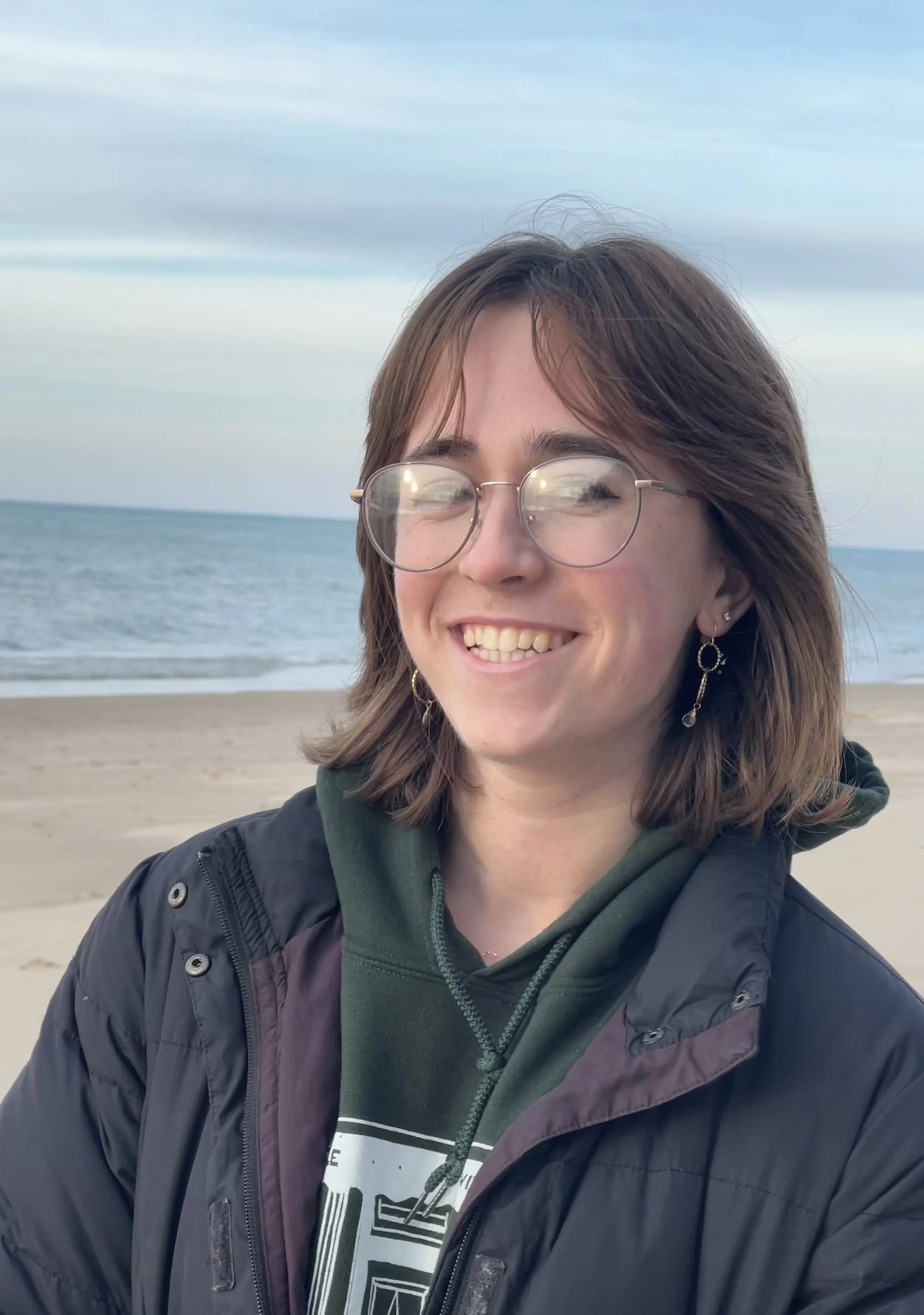
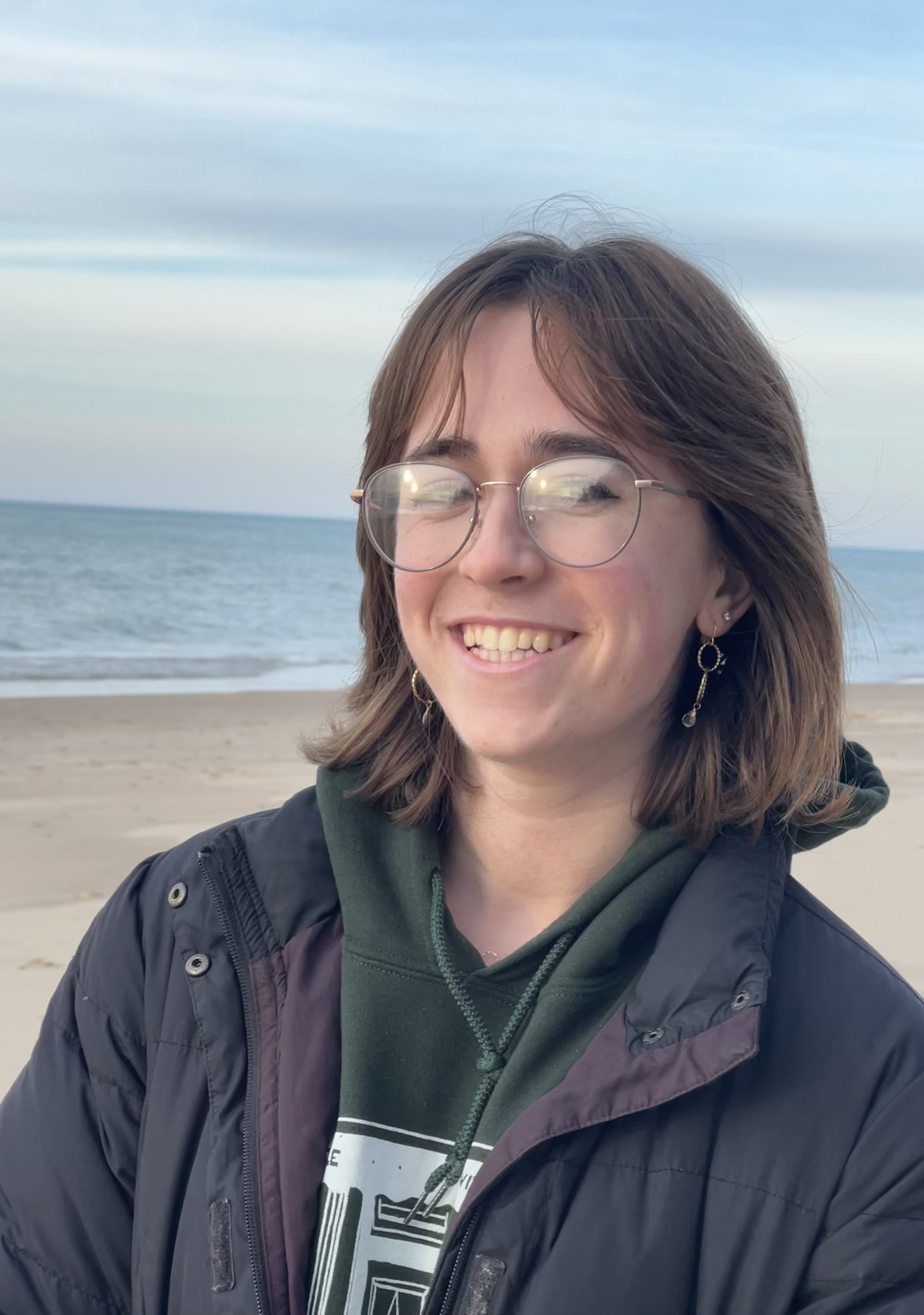
By Emily Potoczak, 2025-2026 Research Collaborator at Power in Place

Hallie Quinn Brown had accomplished a lot in terms of service in her lifetime. She dedicated her life to it from a very young age. After she graduated from Wilberforce University in 1873, she began teaching. This is where she started to change the lives of others through education. She knew that education was so important and taught all over. She started teaching in plantations to allow slaves to get the education they deserved. She taught in many states across the United States, including Mississippi, Alabama, South Carolina, and Ohio. In Alabama, she worked alongside Booker T. Washington.

She continued her dedication to service to many things outside of teaching as well. But in all that she did, educating people was her underlying message. This was a major part of all the organizations that she was a part of and she even helped found some of them. Some examples include the Colored Women’s League of Washington, D.C., where she was the principal promoter principal promoter (1893), the National Association of Colored Women (NACW), where she was the founder (1893), president (1920-1924) and, honorary president (1924-1949), the A.M.E church, where she was the Secretary of Education (1900), and the Ohio Federation of Colored Women’s Clubs, where she was president (1905-1912). It was obvious that she was highly involved and wanted a better place for the women like her. She advocated for and represented so many women.

On top of all of the organizations that she was a part of, she traveled the United States and Europe spreading her message through speeches and articles. Her message was against racism, against repression, for women’s suffrage, and for African American culture and temperance. She even won some awards for her hard work. These awards include honorary degrees and memorials. It is clear that she was busy working hard while advocating for her people. It is definitely justified in why she got these awards.

I believe that she can be connected to the future in many ways. The first way is that all of her work helped the United States be where it is today. She and many others fought for the rights of African American women and women in general. Without their work, women may not have the right to vote today. She is also an inspiration to many young women and shows that hard work does pay off and it helps more than ever. She can also be connected to the future by current politicians. One example is Ayanna Pressley, who is an American politician currently serving in the U.S. House of Representatives, representing Massachusetts' 7th congressional district since 2019. Brown and Pressley are connected because they both have been in multiple places in the United States, both broke down many barriers, both fight for racial justice, women’s rights, and educational equity, and both take part in community driven leadership. It is empowering and inspiring to see women like Brown representing our country today and she would be proud for her legacy to be continued.

References

[1]Kenny, Miles. 2024. “Ayanna Pressley | Biography, District, Massachusetts, Election, & Age.” [2]Encyclopedia Britannica. August 2024. https://www.britannica.com/biography/Ayanna-Pressley. “[3]Hallie Quinn Brown C. 1850 – 1949 – a History of Speech – Language Pathology,” n.d.]https://ubwp.buffalo.edu/history-of-cds/hallie-quinn-brown-c-1850-1949/. Cited Source Material for Question N: “Brown, Hallie Quinn (C. 1845–1949) | Encyclopedia.com,” n.d. https://www.encyclopedia.com/women/encyclopedias-almanacs-transcripts-and-maps/brown-hallie-quinn-c-1845-1949#:~:text=honorary%20Master%20of%20Arts%2C%20Wilberforce%20University%20%281890%29%3B%20member,in%20St.%20Paul%2C%20Minnesota%2C%20named%20in%20her%20honor. Hallie Q. Brown Community Center. “Hallie Q. Brown Community Center,” March 2, 2021. https://www.hallieqbrown.org/site/index.php/about/our-legacy/.
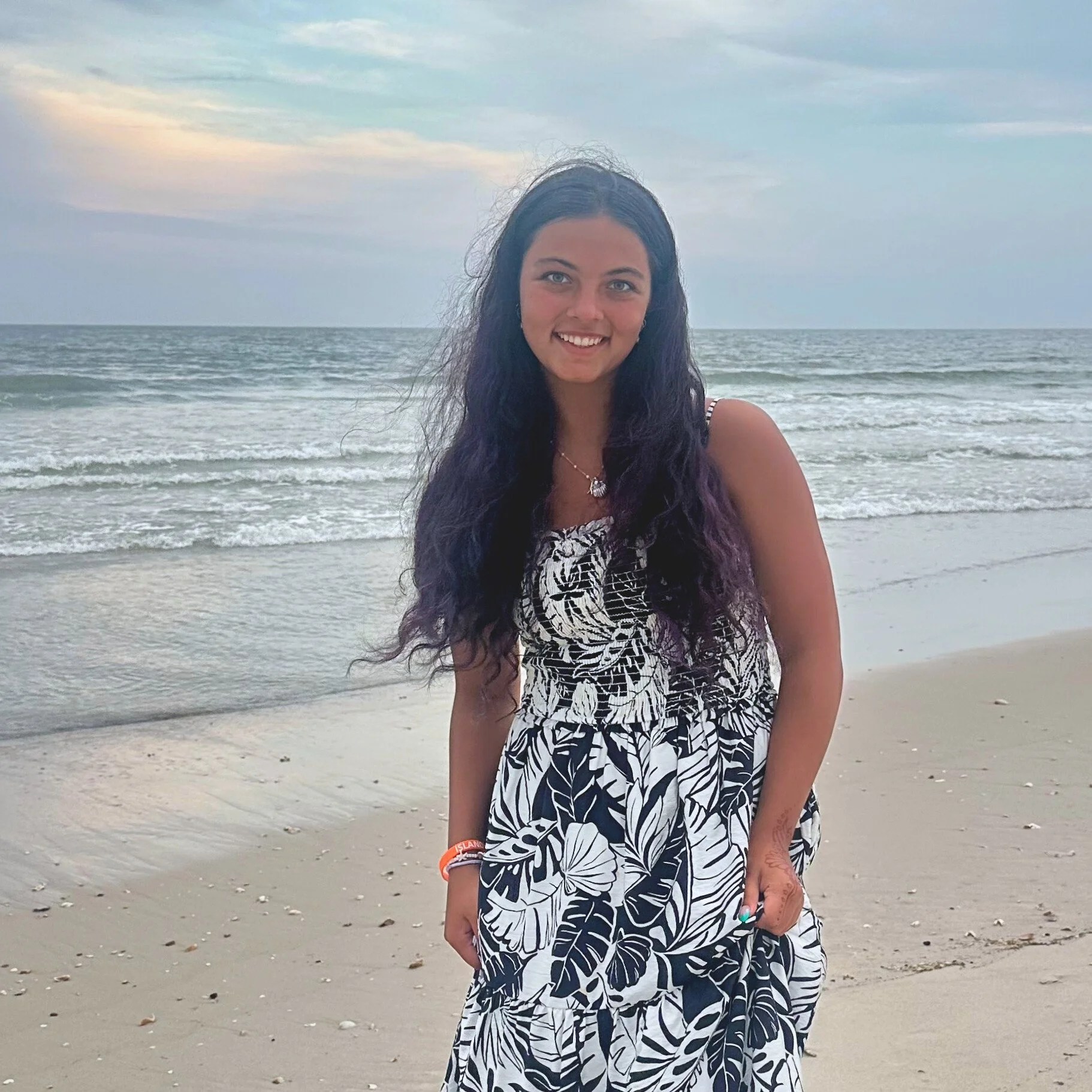
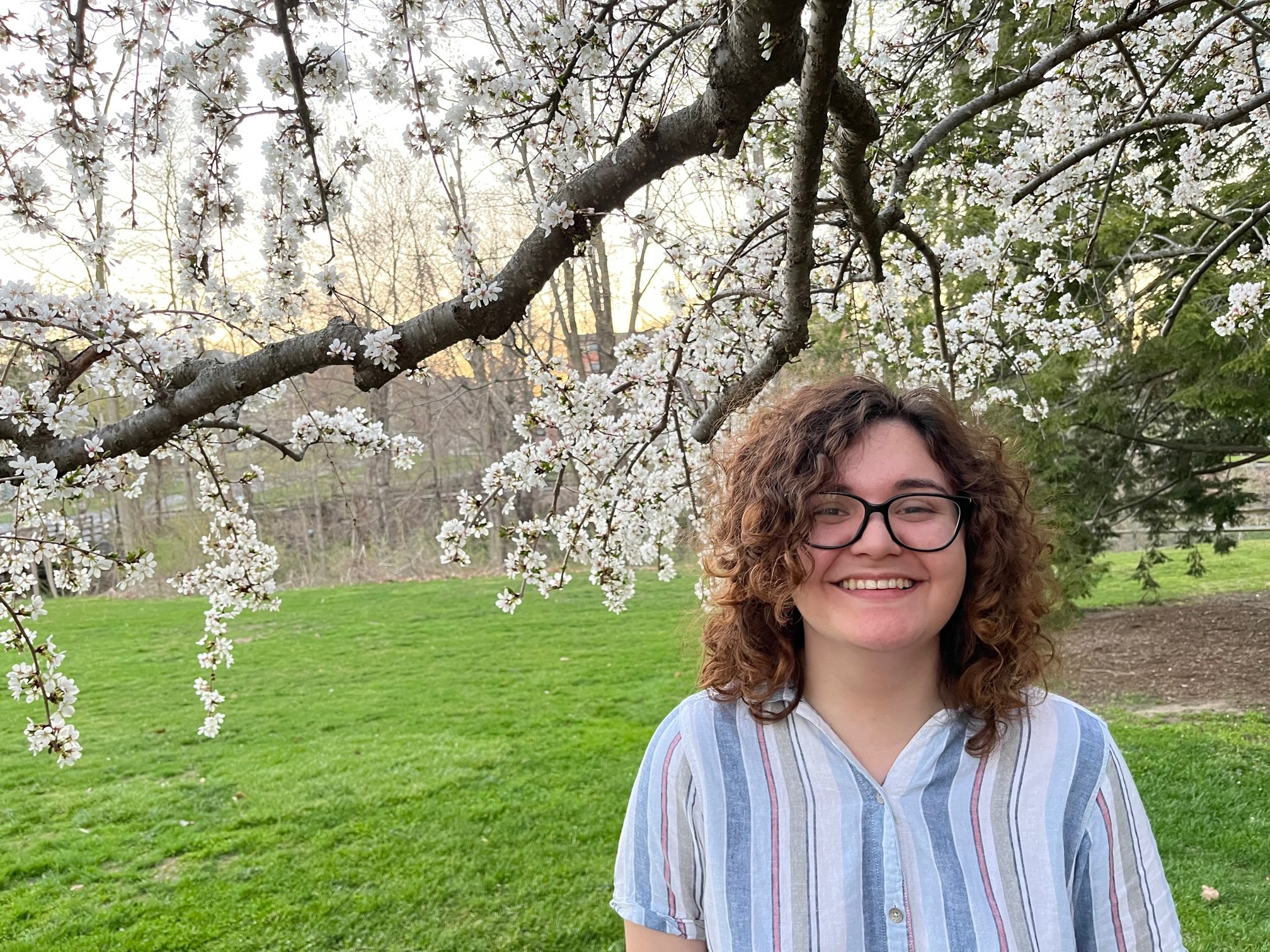
Emily is a sophomore at The Ohio State University and majoring in political science and minoring in Spanish and Law & Public Policy. She is a strong advocate for human and women's rights. In her free time, she hangs out with her friends, plays volleyball, and travels to different places.

A Voice That Wouldn’t Be Silenced: How Nellie Griswold Francis Linked Suffrage, Anti-Lynching, and Civil Rights & How Her Contributions Are Still Important Today

By Macy Grulkowski, 2025/2026 Power in Place Research Collaborator

Nellie Griswold Francis, born in 1874 in Nashville and raised in St. Paul, Minnesota, was a prominent suffragist and advocate for justice, recognizing the interconnectedness of voting rights, safety, dignity, and equality. As the only African American graduate of St. Paul High School in 1891, she defied societal barriers early on. She utilized public speaking, particularly in church, to advocate for inclusion and equality among women, founding the Everywoman Suffrage Club in 1914 to uplift women across racial lines. Francis’s activism extended beyond suffrage to anti-lynching efforts; she made significant strides toward racial justice, exemplified by her advocacy for anti-lynching legislation in Minnesota, leading to a state statute in 1921 amid a surge of racial violence post-World War I. Despite facing personal racism, such as protests against her and her husband's move into a white neighborhood, her courage symbolized her relentless activism. She leveraged diverse platforms—churches, women’s clubs, and media—to address racial discrimination and civil rights, emphasizing collective struggle and solidarity. Francis’s legacy illustrates that voting rights are inherently tied to the broader fight for racial justice and human dignity, as she advocated for a peaceful but strong approach to freedom, ensuring her voice and those of Black women were heard in the democratic process. With Francis recognizing the importance of the relationship between voting rights and equality, she advocated for women, regardless of color, and she strongly felt that everyone should have a say in community issues. Francis campaigned hard for human rights, particularly during the time of lynching. She was effective in putting an end to lynching by pushing Minnesota lawmakers to approve legislation. In today's world, having a figure like Francis is very important. Due to a lack of election security, our country is facing issues that could lead to a decline in voting rights and potential corruption in the polls. The present administration puts US citizenship in serious uncertainty with the SAVE Act. The SAVE act is a proposed federal bill where citizens would have to present documentary proof of U.S. citizenship in person to register to vote in federal elections. This raises questions on whether married individuals who have changed their name will have problems voting since their name technically does not match their birth certificate. Francis would see this as a clear violation of voting rights. Francis’s efforts towards racial violence and accountability are also directly associated with many movements today. Francis’s contributions towards Minnesota's laws are something that needs to be reflected on when it comes to pushing for more laws against police brutality. This has been an issue especially in Minnesota as we experienced the Gorge Floyd protests which sparked nationwide protests. With Francis’s push to stop lynching and our current push towards stopping police brutality there is a clear issue with accountability for figures of power in our communities. The significance of community-based activity and organizing is demonstrated by these problems. Participating in local activities, clubs, organizations, the city council, or your church can help create a more welcoming and inclusive community. When you depend on community resources and address issues like inequality, public safety or education access, which Francis discovered to be crucial, it's a great way to accomplish good community building skills.

References

Nelson, Paul. “Francis, Nellie (1874–1969).” *MNopedia*, Minnesota Historical Society. Last modified April 15, 2025. Accessed October 22, 2025. https://www3.mnhs.org/mnopedia/search/index/person/francis-nellie-1874-1969 Douglas, Leetta M. “Votes for ‘Everywoman’: Nellie Griswold Francis, the Women of Rondo, and Their Suffrage Crusade.” In *Ramsey County History*, vol. 55, no. 2, Summer 2020. Saint Paul: Ramsey County Historical Society. PDF, https://rchs.com/wp-content/uploads/2020/09/RCHS_Summer-2020_LDouglas.pdf Picture Reference- Nellie Francis, ca. 1924. Image is from Mary Dillon Foster's Who’s Who Among Minnesota Women (1924), 111.

Macy Grulkowski is a rising senior majoring in political science and minoring in global studies and sustainability. She finds passion in advocating for many community issues where she also finds passion on campus as president of TRIO student leaders to help first generation students, students who have disability, or students who receive federal funding for tuition.

The Double Standard of Being Loud

By Maddie Possamai, Summer 2023 Collaborator at Power in Place

Societal gender norms and expectations have long dictated the social perceptions of men and women, causing an entire society to believe that one must act or present themselves a certain way. Women have been encouraged to be soft-spoken and reserved whereas men are motivated to be assertive and dominating. In recent years we have seen many women, especially women in power begin to express themselves in an assertive and loud way. However, this has caused a negative stereotype to perpetuate, especially about women of color who choose to express themselves loudly.  

Throughout history, gender stereotypes have been prominent in society. Growing up, girls are constantly being told “act like a lady” but how does one “act like a lady” According to gendered expectations, to “act like a lady” is to be polite and submissive and let the men take charge because the men are encouraged to take up space, be a leader and be vocal. When a woman is spoken and takes up space, they are seen as aggressive whereas men are viewed as assertive. Men who talk loud or a lot are told they have a “booming voice” whereas women are “loud and annoying.” Women who fight for the things that they want and take initiative are considered “bossy” whereas men who do the same are considered “confident.”  This creates a barrier for women fighting for employment and places in the office as many places enforce these negative stereotypes. It is prominently seen with elected women or women running for political office. 

Women of color especially deal with the consequences of this gender role as many are stereotyped as “loud” or “angry” black women or “spicy” Latinas. These stereotypes characterize women of color as hostile or aggressive therefore causing their male counterparts to be less receptive to their ideas. Women of color in power such as Kamala Harris and Michelle Obama have dealt with the consequences of this stereotype in their places of power. In Michelle Obama's book, she states that she is “louder than the average human being” and that she has “no fear of speaking [her] mind” but that those “traits don't come from the color of [her] skin but the unwavering belief in [her] own intelligence.” Obama has been a victim of the “loud, angry black woman” especially while former president Barrack Obama was running for his first term. Michelle Obama fought this stereotype during an interview with Oprah Winfrey stating that she just plans on being true to herself. This stereotype, however, was not present with any former first lady (which had all been white) or any former president (which had all been white men). 

“I admit it: I am louder than the average human being and I have no fear of speaking my mind. These traits don’t come from the color of my skin, but from an unwavering belief in my own intelligence.” Michelle Obama 

Similarly, in the 2020 presidential debate with former vice president Pence, Vice President, Kamala Harris had the quick response “Mr. Vice President I’m speaking,” when Pence hastily cut off Harris during the debate. Pence, a white man, had no regard for Harris’ time during the debate, leading to Kamala Harris’ famous words. Vice President Harris stated in an interview that she was prepped for interruptions as Pence interrupted her sixteen times. Harris received praise from women, however, she was still turned into a meme after the debate due to her response to Pence whereas former Vice President Pence was only turned into a meme due to a fly on his head. The Vice Presidential debate showed how women, especially women of color who speak their minds are are “loud women” are not taken seriously and that their words, thoughts, intelligence, and ideas are looked over and shrugged upon due to the color of their skin and the gender they identify with. 

The stereotypes in our society today, however prominent, must be challenged to liberate women from gendered expectations and allow them to reach their full potential. A society, where women can speak up and take up space without fear of retaliation, allows for more diverse participation of voices where decisions are being made such as in public office, workplaces, elections, etc. Women in power such as Kamala Harris and Michelle Obama have begun to pave the way for other women of color who have been victims of this negative stereotype, by speaking up for what they believe in and not being afraid to take up space. By challenging these gendered societal norms that loud women are aggressive but loud men are assertive, it would create more opportunities for women to assume office and disband the negative stereotype of women of color. 

References

[1] Groskop, Viv. “In Praise of Loud Women – the Joy and Power of Being Noisy and Female.” The Guardian, 6 Nov. 2018. The Guardian, https://www.theguardian.com/lifeandstyle/2018/nov/06/in-praise-of-loud-women-the-joy-and-power-of-being-noisy-and-female.

[2] Liptak, Kevin. “Michelle Obama Says ‘angry Black Woman’ Label Rooted in Fear | CNN Politics.” CNN, 19 Dec. 2016, https://www.cnn.com/2016/12/19/politics/michelle-obama-oprah-angry-black-woman/index.html.

[3] Motro, Daphna, et al. “The ‘Angry Black Woman’ Stereotype at Work.” Harvard Business Review, 31 Jan. 2022. hbr.org, https://hbr.org/2022/01/the-angry-black-woman-stereotype-at-work.

[4] Smith, Reiss. “Kamala Harris Shutting down Mike Pence at the Vice Presidential Debate Has Already Been Remixed into a Lady Gaga Track.” PinkNews | Latest Lesbian, Gay, Bi and Trans News | LGBTQ+ News, 8 Oct. 2020, https://www.thepinknews.com/2020/10/08/kamala-harris-mike-pence-im-speaking-vice-presidential-debate-chromatica-meme/.

Maddie Possamai is a rising junior at Wheaton College in Massachusetts majoring in Political Science with minors in Journalism and Visual Arts. At Wheaton College she is currently working on creating a Commuters Organization on campus to advocate for more benefits for commuter students. After graduating college, Maddie hopes to work in Political Journalism. 

The History of Women’s Political Participation and Power

By Molly McNamara, Summer 2023 Collaborator at Power in Place

While the modern woman enjoys many of the same political rights and freedoms as her male counterpart, history has not been so kind. Women have lived in the political shadow of men for centuries and many political ‘firsts’ for women have occurred fairly recently. In order to better understand where women in government are today, it is necessary to review some important moments in women’s political history. 

The fight for women’s rights began in the mid-19th century. The Seneca Falls Convention in 1848 was the first big push for women’s suffrage. It was convened by Elizabeth Cady Stanton, Lucretia Mott, and others who demanded a variety of rights for women as well as an end to slavery. This event was formative to first-wave feminism, as it inspired many women to fight for change. Women began to run for public office after that including Victoria Woodhull for president in 1872. This was one of the first attempts of a woman to enter an influential political position, paving a way for others to do the same. Some women successfully entered small public office positions during this time period despite not having the right to vote. 

The early 20th century brought about the first appointments of women to Congress. Jeannette Rankin was elected to the House of Representatives in the state of Montana three years after women gained the right to vote there. The first female senator was Rebecca Felton of Georgia, who entered the position in 1922. While these historical advancements for women in politics were crucial stepping stones for women’s rights today, women waited over 75 years after the Seneca Falls Convention to enter the federal political sphere. History has been slow to allow women into powerful positions, and that is still seen today. 

The 19th Amendment to the Constitution, which passed in 1920, granted women the right to vote on the federal level. This was a huge win for women, as they had been fighting for suffrage for generations. Many women entered public office after that. Soledad Chacon was elected New Mexico Secretary of State in 1923 and was the first woman of color to hold statewide elected executive office. In 1924, Cora Belle Reynolds Anderson was elected to the Michigan State House and was the first Native American woman in a state legislature. Many more female politicians followed in their footsteps and entered political positions, giving women a voice that they did not have before. 

In the last 50 years, much progress has been made to advance women’s political power and participation. Sandra Day O’Connor was the first woman appointed to the US Supreme Court by Ronald Reagan in 1981. In 1984, Congresswoman Geraldine Ferraro was the first woman to run on a major party ticket as the Vice Presidential running mate for Walter Mondale. In 2016, Hillary Clinton became the first nominee for president of a major political party. Despite her loss, she demonstrated the progress made for women in the political world. Lastly, Kamala Harris was elected the first female Vice President of the United States and has shown people that women are the future of politics. She and many other female politicians demonstrate the momentous progress made in women’s political power in the US. 

Women’s political representation today is also the highest in US history. Women make up 28 percent of all members of the 118th Congress. In the House of Representatives, 153 of the 540 members are women, and the 2022 midterm brought in nearly two dozen new female House members. Women also have higher voter registration numbers than men, as well as higher voter turnout. As of 2022, 70 percent of women are registered to vote while 68.2 percent of men are registered. In the 2020 Presidential election, 82.2 million women voted while 72.5 million men voted. This pattern of higher voting and registration among women has been the case for decades. 

            Therefore, women have taken over politics in many ways. They have infiltrated all forms of public office from city council to Supreme Court Justice. They are voting in high numbers and have come a long way since 1848. Despite this, some political positions including Vice President were not filled by a woman until quite recently. There is still a lot of work that needs to be done in order to create more political equality for women. Men still hold a majority of public office, and there are often stigmas around women having powerful positions. But with time, education, and inspiration, women’s political power and influence can continue to grow.  

References

[1] Center for American Women and Politics. “Milestones for Women in American Politics.” Rutgers University. 2022. https://cawp.rutgers.edu/facts/milestones-women-american-politics

[2] Cunningham, John. “Seven Female Firsts in US Politics.” Britannica. August 12, 2016 https://www.britannica.com/list/7-female-firsts-in-us-politics 

[3] Leppert & DeSilver. “118th Congress Has A Record Number of Women.” Pew Research. January 3, 2023 https://www.pewresearch.org/short-reads/2023/01/03/118th-congress-has-a-record-number-of-women/#:~:text=Women%20make%20up%20more%20than,and%20nonvoting%20members%20of%20Congress.

[4] Center for American Women and Politics. “Gender Differences in Voter Turnout.” Rutgers University. 2022.  https://cawp.rutgers.edu/facts/voters/gender-differences-voter-turnout

Molly McNamara is a rising Junior at George Washington University. She is double majoring in Political Science and American Studies with a minor in Women’s, Gender, and Sexuality Studies. Molly is involved in the GW campus chapter of the American Foundation for Suicide Prevention and is interested in writing, mental health advocacy, and political engagement. After college she hopes to either enter the political realm or nonprofit work in hopes to create a more equitable society.

An Interview with Lisa Buckley

Image: Eden Gross

By Eden Gross Summer 2023 Collaborator at Power in Place


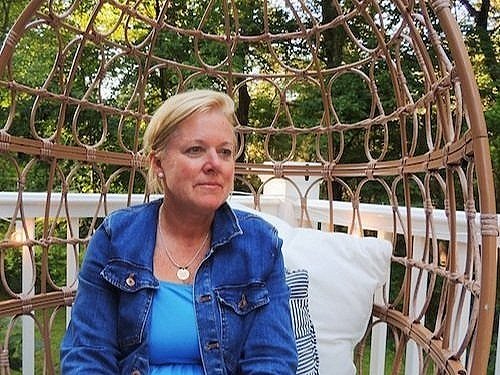
Lisa Buckley sits with her dogs on a wicker chair outside of her home recalling the story of the Irish wolfhound therapy dog named Ezra, who would often be compared to a table by students of the Lyme-Old Lyme school district. The students would sit around Ezra, occasionally making eye contact with each other and even talk about their day as they pet him. One day a student sitting alone with Ezra mentioned to the handler that they were new to the district and had no one to sit with at lunch. This moment of opening up offered staff the opportunity to intervene and offer support and resources for the student that felt brave in speaking on an issue they were facing.

The beauty of this moment is the mission of Lisa Buckley’s strength after the loss of her son, Tim. Reflecting upon Tim’s struggle with mental health and substance abuse issues, she recalled the special connection between her son and Tip, the dachshund that sits on the project's logo. Buckley speaks of Tim’s own experience of receiving emotional support from Tip, who never questioned or passed judgment on him. Buckley could recognize then the link between animals and emotional regulation and used that understanding in 2018 when founding Project Paws, a non-profit dedicated to connecting therapy dog teams to the Lyme-Old Lyme school district. 

The project has also been able to provide financial assistance and training to school staff and those in the community.  The project currently has 12 trainers which include staff, such as counselors and teachers that work in what are called facility teams to provide support to the community. Buckley says that her grief from a tragedy has been turned into collateral beauty, one that inspires her in this project. Her work not only extends outward in the community but within the project where Buckley trusts in trainers knowledge and the experiences they have of animal therapy to improve the project each day.

In the four years of the project, Project Paws has hosted events such as candlelit yoga and presentations. As the elementary and middle school students move up in their schooling, the effects of their access to therapy dogs will only continue to show its benefit. Buckley particularly has an interest in the long term benefit of providing therapy dogs on attendance, as an alternative to leaving school when facing mental health issues.

 To learn more about Project Paws, follow their website and their facebook


Eden Gross is a rising senior at the University of Massachusetts Amherst studying Women, Gender, Sexuality Studies. Her interests include cooking, gardening, and reading. After college she hopes to work in community care and activism which engages with reproductive justice.

Per-Sister Speaker Micaela (Miki) Porta

Gia Clarke, Summer 2023 Collaborator at Power In Place” 

Power in Place had the privilege of speaking with Miki Porta, the former president of the League of Women Voters of New Canaan CT. She held this position for five years. The League of Women Voters is an organization that was founded in 1920, six months before white women got the right to vote in the United States. During her time with the League, Porta led many of its executives, such as the “Know Your Representatives Guide” geared towards informing citizens about their local candidates, and many voter registration drives. Porta is also the co-founder of Pesticide-Free New Canaan, a non-profit initiative that educates people about the dangers, ecological and human health-related, of chemical lawn pesticides. She received her B.A. in English and Fine Art History at Tufts University.

Miki has always been an advocate for other people. Miki recalls her first political act when she was just nine years old: “We had just moved from NYC to a suburb in Connecticut. And I heard people talking about woodpeckers damaging their homes. So I started reading up on how to humanely deter woodpeckers from doing this to your home. And I wrote a little short pamphlet on woodpeckers.” She further iterates that she made woodpecker guards to deter the woodpeckers from damaging homes. As absurd as this was compared to her peers at that age, “Everybody had lemonade stands in those days and I had these woodpecker guards,” it was a political and informative act. At nine years old, she was an advocate for woodpeckers. Miki’s desire to educate and advocate has shown to carry her throughout her life, as seen through her work with the League and other nonprofits. 

The main responsibility of working with the League of Women Voters was the holding of candidate debates. While most national debates are done through the media today, prior to 1980, the League always hosted debates of all levels. Despite this shift in history, New Canaan’s chapter still holds candidate debates for every level of government to this day. Porta, and the League itself, have an educational motive when it comes to debates rather than the media’s debates, which are, as Porta says, “a forum that was a little lower on substance and a lot larger on showbiz and sizzle.” Because there is an emphasis on voter education rather than drama, educationally driven Porta wanted to make sure that the questions are neutrally worded and that the assortment of questions was also neutral. 

Because of the League’s emphasis on educational and non-partisan mission, when picking women to write the questions, they would “hand-select the writers, and we didn’t hand-select them for political neutrality, we hand-selected them for their intelligence, their objectivity, their writing and analytical skills, their research skills, it was a really serious responsibility,” as Porta says. The League is also in charge of the “Know Your Representatives Guide” which is an informational guide to every single elected candidate. 

Talking to Porta was an insightful experience, as it helped us PiP interns to figure out how to best educate people on our own Day of Action voter initiatives. Miki Porta taught us to be informative, objective, and open-minded when educating and encouraging others to vote for our initiatives. Thank you so much Miki for speaking with us!

Gia Clarke is a rising Sophomore at DePaul University. She is a journalism major with a minor in psychology. She is also passionate and heavily involved in advocacy work at DePaul, as she is the Diversity, Equity, and Inclusion chair for DePaul’s Planned Parenthood Generation Action Committee. In her free time, she enjoys writing, playing electric guitar, crocheting, drawing, and reading. One day, she aspires to be a journalist that gets to travel and write about current events worldwide.

Local Politics from a Local Politician

By Molly McNamara, Summer 2023 Power in Place Collaborator

For many Americans, local politics is not on the forefront of their minds. What goes on at Capitol Hill seems much more pressing, with the big words and flashing colors of FOX News and CNN covering the issues of Washington, DC. But local politics affects the everyday lives of members of your community. The decisions of Congress are implemented by state and local governments, making your state senator or city council member crucial decision-makers in your life. 

Through my photoshoot and interview with City Council Member Elizabeth Orona, I gained some incredible insight on the importance of local politics. She told me about some of the important decisions that have been made in the local city council that affect my community. One of those decisions regarded allowing marijuana dispensaries in Solvang. In California, the use of marijuana is legal on the state level, but local communities can make decisions about its presence. For Elizabeth, marijuana is a big problem that is disruptive to people and their families. She eventually proved to the other members of the council that bringing marijuana to Solvang was the wrong decision, despite their original belief that a dispensary would bring economic benefits. 

Elizabeth’s experiences are a great example of the importance of local politics. Her presence on the city council has brought changes to the community that most would never consider. That is why it is important to not only vote in local elections but to also support women running for local office. The members of city council, school board, and many other positions are ones that need as much attention as president or Supreme Court justice. 

Unfortunately, local elections do not receive as much attention as they deserve. Research shows that the 2020 presidential elections saw a 66.8 percent voter turnout and 50.3 percent in the 2018 midterm elections. Roughly a quarter of eligible voters participate in municipal elections and only five to ten percent turnout in school board elections. Representation chosen by only ten percent of the community is not representation that is considering the majority of community members. This data is devastating because the local level makes important decisions about important services like housing, police, public schools, and more. It is necessary for more people to participate in these local elections, because their voices need to be heard regarding these important issues. 

There are some useful methods that can increase voter turnout in local elections. These include providing more resources about candidates and polling locations. Since many people do not follow local elections, they may not know anything about the candidates.  Election timing could also be improved as many cities do not maintain the same voting dates in each election cycle. By having the same voting day in local elections, like how presidential elections are on the first Tuesday of November, more people may be aware of local elections. Increasing opportunities to vote can also help including opening more polling locations and having the polls open longer. 

Therefore, it is important to bring more awareness to local politics and local elections. Crucial decisions in your community are made by officials, such as Elizabeth, and it is imperative to participate in them by using your voice and voting. Advocating for better voting policies like voting resources and election timing are necessary to ensure that more people participate in local politics. 

 References

 [1] Brennan, Jan. “Increasing Voter Turnout in Local Elections.” National Civic League. Spring 2020 https://www.nationalcivicleague.org/ncr-article/increasing-voter-turnout-in-local-elections/

 [2] Fair Vote. “Resources.” Fair Vote. 2020 https://fairvote.org/resources/voter-turnout/

[3] Hajnal, Zoltan. “Why Does No One Vote in Local Elections?” New York Times. October 22, 2018 https://www.nytimes.com/2018/10/22/opinion/why-does-no-one-vote-in-local-elections.html 

[4] Devine, Kelly. “Visualizing Voter Turnout in Local and School Board Elections.” Carnegie Corporation of New York. November 2, 2022 https://www.carnegie.org/our-work/article/visualizing-voter-turnout-local-school-board-elections/

Molly McNamara is a rising Junior at George Washington University. She is double majoring in Political Science and American Studies with a minor in Women’s, Gender, and Sexuality Studies. Molly is involved in the GW campus chapter of the American Foundation for Suicide Prevention and is interested in writing, mental health advocacy, and political engagement. After college she hopes to either enter the political realm or nonprofit work in hopes to create a more equitable society.

Time Capsule Speaker Series

By Sylvia Coyle, Summer 2023 Collaborator at Power in Place

We want to extend our deepest gratitude to the Time Capsule team for participating in our in-house Per-Sister Speaker Series!

The Time Capsule team is made up of seven Summer Collaborators with three facilitators. The Collaborators are Lenora Upchurch, Talia Mesnik, Alyse Covington, Catherine Dimare, Mia Galvam, Emma Quirk, and Liv Jewell. They shared a presentation detailing the progress they have made on their summer project, creating a social media platform, sharing the timeline of events leading to the suffragette movement, as well as the milestones in the years after. In their presentation, they highlighted the importance of including the milestones after the suffragette movement, as the fight for equal rights and the right to vote did not end when the suffragette movement did. The end of the suffragette movement was just the beginning of the fight for everyone to have the right to vote.

The team discussed the new ways that they learned to conduct research this summer. They utilized databases and sifted through research done by previous summer collaborators at Power in Place. Catherine mentioned the need for patience, saying, “You need to give yourself some time and don’t get frustrated too fast.”

Through their research, they learned about important people who they weren’t aware of before this summer project. Lenora enjoyed learning about Mabel Lee, a woman who mobilized the Chinese community to earn women the right to vote. Emma brought up Mary Cary, who was the first Black woman to become a co-editor of a newspaper in Canada. Lenora highlighted the efforts of Gertrude Simmons Bonnin, an indigenous suffragist who helped to found the National Council of American Indians. These are only a few examples of the incredible women of color the Collaborators discovered. 

Thank you to the Time Capsule team for sharing your work with us. We look forward to what they create and accomplish at the end of the summer!

Cindy Price Can Do Anything, and So Can You

By Madeleine Broussard, Summer 2023 Collaborator at Power in Place

The only thing stronger than her deep Southern accent is Chambers County Judge Cindy S. Price herself. That much I’m sure of on August 4th as she greets me at the front of Barbers Hill Middle School North in Mont Belvieu, Texas, where she encounters yet again one of the great loves of her life: education.

Judge Price fills up the whole school with her presence. She leads me down each hallway, explaining what classrooms used to be there and what has been remodeled since she left the school, fawning over distinguished athletic coaches we look at through trophy cases boasting some of Barbers Hill’s sports teams during the years she taught. I can see the memories flooding her mind at miles per minute. They don’t overwhelm her; she’s bursting with energy, like she’s been waiting forever for the opportunity to sit down and spill all the joy and wisdom she learned here. Barbers Hill empowered Judge Price to campaign. Much of her voter base is comprised of the relationships she has built in this community.

She’s quick to tell you power isn’t her aim. She is an unquestionably strong woman, but she does not work to achieve strength or status — Judge Price is here to advocate for “the little guy.” Whether you’ll find “the little guy” struggling in the classroom, seeking representation in court to settle a family law matter, or voting in the next Chambers County election depends on where in the 40 plus-year timeline you’re looking at her lengthy career of service.

On my private tour of the school, we frequently encounter former coworkers of Judge Price’s. They squeal over each other’s hair, embrace, and chatter for a few minutes at a time. I wonder how on earth she had managed to balance principalship, law school, and the millions of friends she made here at Barbers Hill, but then I remember Judge Price can do anything she wants.

I see an especially fiery glimmer in her eyes as she recounts the circumstances of what some perceived as a clash between her job and her aspirations. “Watch me,” she said to people who told her she couldn’t juggle both law school and being the principal of a school. Judge Price is a mother of three with a long, comfortable career in a completely different field, yet she chose to make the dramatic pivot to law and then somehow manage rise to the top in that field as well. I am convinced she’s a superhero in disguise.

“It is a love that you can’t stop,” she says of education, grinning as she tells me her husband, who is in his seventies, has recently decided to go back into the field after retiring from it. Then it makes sense: of course Judge Price can do it. When you have a passion for your cause, your community, and your work, you can’t help but shoot for the stars. At Power in Place, we often find that women seek positions of political influence for much more than political influence’s sake. The typical woman in office just wants to be a force for good in the world. That’s the most inspiring thing about Judge Price: she exemplifies achievement, humility, passion, and work ethic all for the sake of the people she serves. With a Price-caliber drive, you can do anything, too.

Chambers County isn’t huge. Mont Belvieu is a tight-knit community best known for its stellar schools, many churches, and nearby petrochemical plants. Local politics are a bigger deal here, and theory-touting Mount Holyoke students like myself are few and far between. So, naturally, Judge Price doesn’t have much to say on feminism. What she does say reminds me to put my money where my mouth is.

“I just think women should be nice to each other,” she says. “Like, if you become vice president, yay! I’m happy for you. I support you. That’s how it should be.”

I’ll give an amen to that.

Madeleine Broussard is an English major at Mount Holyoke College. She is an editor for an on-campus pop culture publication and serves on a Student Government Association committee. Outside of school, Madeleine enjoys reality TV, poetry, writing Yelp reviews, and deep-fried food.

Judith García: A Chelsea Native Fighting for Community

By Maddie Possamai, Summer 2023 Collaborator at Power in Place

Image from: Taylor Sprague

Meet Judith García

On July 5th, 2023, I had the pleasure of interviewing Representative Judith García. García represents the 11th Suffolk District in Massachusetts, which includes Chelsea and Everett. García is the daughter of a single mother who immigrated to the United States from Honduras to Chelsea, MA. During our interview, García stated that the Bosson Playground in Chelsea is her place of special meaning. When García was younger, she was not allowed to play on the playground. She was only allowed to go “from home to school, school to home” because, back in the 90s, Chelsea was considered very dangerous. This inspired García to study urban planning at Wheaton College in Norton, Massachusetts. She became passionate about redesigning the urban landscape to ensure that children, families, and people of all kinds could enjoy the city. After García graduated, she ran and was elected to City Council at 23. García served City Council for eight years and pushed policies focused on changing Chelsea’s urban landscape such as creating a more accessible community. 

The Importance of Urban Planning

During our interview, I was inspired by Representative García’s work involving Urban Design. She stated that “homes are a pillar, they are a pillar of health, they are a pillar for the lives of everyone.” As well as working for City Council, García also worked for a leading nonprofit that focused on expanding affordable housing. Representative García informed me about the city of Everett’s new senior housing, as Everett has a big senior population that has been affected by the rising prices of rent. In partnership with East Boston Neighborhood Health Center, Everett now offers 66 affordable homes.​​ Throughout our interview, the importance of affordable housing was prominent as housing directly affects a person's stability. Representative García’s work made me reflect on the housing insecurity in our community today and provided me with insight as to what goes on behind the scenes.

Not only is housing important when it comes to designing an accessible urban landscape, but reliable and accessible public transportation is too. On the day of our interview, the Sumner Tunnel in Boston was closing therefore the city of Boston began promoting public transportation. Despite this, Boston has not made public transit free. With the closure of the Sumner Tunnel, there is going to be more traffic, therefore more pollution, which can be solved with access to free transportation. García’s office advocated for residents to have completely free transit. Representative García argued that public transit should not only be accessible but it should also be reliable and that it is one of the biggest challenges our state is facing. Transportation in Boston is consistently undergoing work and closure. García states that one of the solutions to this issue is to expand modes of transportation, that riding a bike should be more accessible and that cities such as Chelsea have access to the waterfront and the ferry. A quote that Representative García said in our interview that I thought was incredibly eye-opening and inspiring is that “it shouldn’t be our zip code that determines what we have access to or not.” This quote impacted me as it opened my eyes to the lack of resources that many people endure solely because of where they live, what they can afford, and what is available to them and it should not be like that. Transportation and housing are human rights and should be treated as such. 

Representation and Why It Matters

The city of Chelsea had to wait almost 32 years to have representation as Chelsea is a predominantly immigrant community. Now that Representative García is elected, the city of Chelsea has authentic representation at a state level. García states that “finally this community elected someone that looks like them and lives like them,” as she is a Chelsea native and has the lived experience that many residents do. This has an impact on many of the policies that she fights for as she has the people's best interest in mind. García is leading the health equity act which makes sure that hospitals serve everyone and all populations. She is also fighting for the legislature that is expanding SNAP benefits to fight food insecurity in the state. Representative García expresses that “as a state, we have the responsibility to ensure that immigrants who are legally present at least get helped with a basic human need such as food.” García states that the importance of those two pieces of legislation is enhanced by the fact that she has lived experience and that is why representation matters. As a Latina woman who grew up with immigrant parents, this part of our interview was truly empowering to me as growing up, I never saw someone who looked like me in public office. Representative García is an example of the importance of representation to a community and how it affects the policies passed and I am incredibly grateful to have had the opportunity to interview her. 

Maddie Possamai is a rising junior at Wheaton College in Massachusetts majoring in Political Science with minors in Journalism and Visual Arts. At Wheaton College she is currently working on creating a Commuters Organization on campus to advocate for more benefits for commuter students. After graduating college, Maddie hopes to work in Political Journalism.