Every Mother, Sister, Daughter and Friend Can Touch Our Lives and Make a Difference

BY: JENNIFER, SIOBHAN, AND NIAMH, pip guest bloggers

I am a milliner who lives and works in Brewster, New York.  As a milliner, I have been in business for over 25 years and have sold my designs to high end retailers and private customers, worldwide.  I studied millinery during my junior year of study in London and began selling hats when I graduated college in 1993. Over the years, I have worked as a women's wear buyer and merchandiser. I am a wife and mother to twin girls who were born very prematurely.  To say the last 14 years has been challenging and a juggling act would be an understatement.  It is not always easy to be a mom and a business woman, sometimes you have to put what you love doing aside.  While always maintaining my business at a certain level it is just in the past year I have been able to focus more time on my hats.

Large Message Fedoras made of Toyo Straw by Jennifer Hoertz-Mulcahy, Milliner/ Hat Designer www.jenniferhoertz.com & mother of Siobhan and Niamh
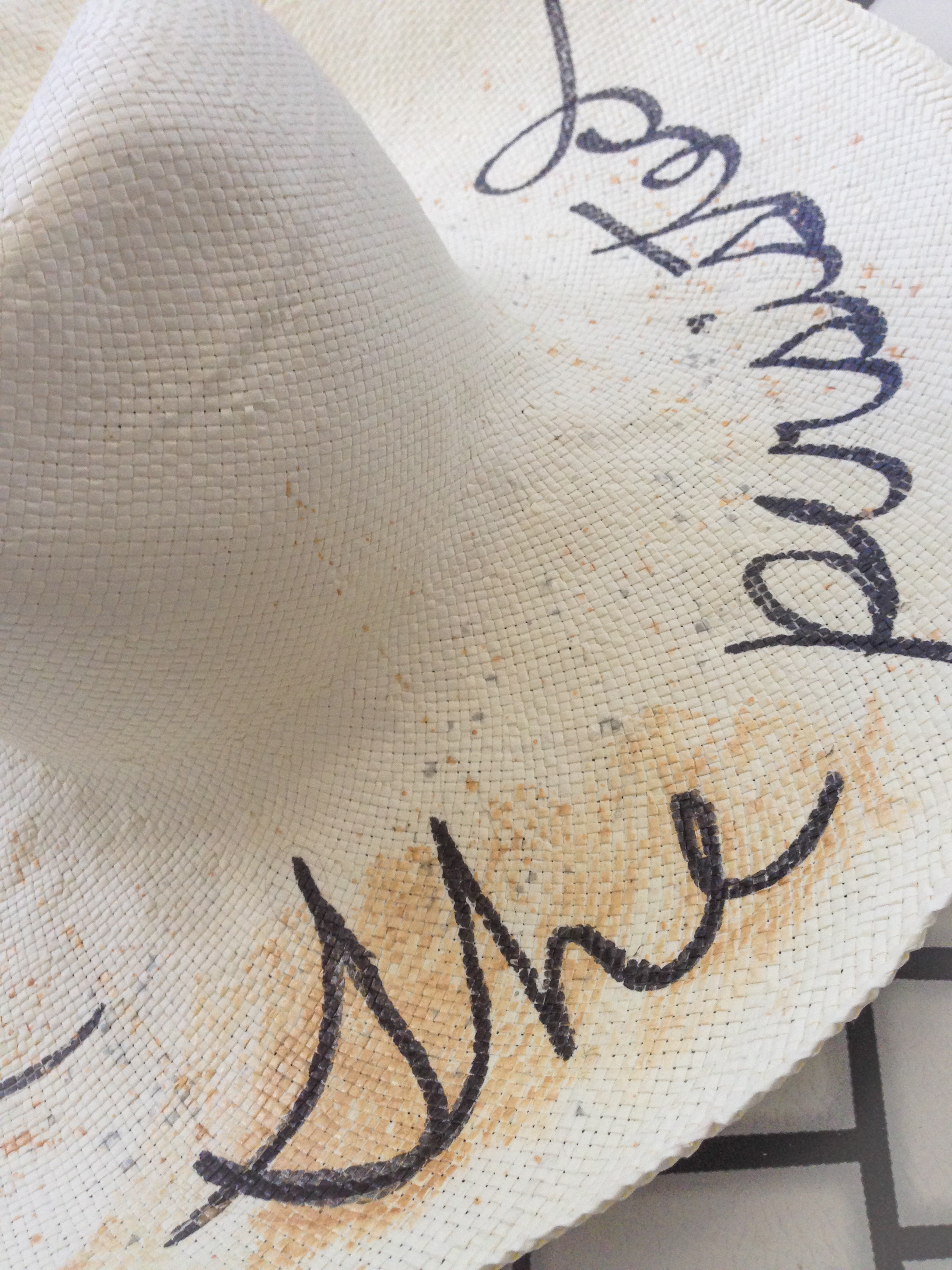
Large Message Fedoras made of Toyo Straw by Jennifer Hoertz-Mulcahy, Milliner/ Hat Designer www.jenniferhoertz.com & mother of Siobhan and Niamh

When Katrina, who also photographs my collections, asked me and my girls to be a part of the PIP nevertheless  campaign it was an honor and has been very exciting to come up with an idea in my genre of millinery.  Back in 1998 and again in 2005 while working with a sunscreen company, I began putting the SPF message on simple sun hats as a reminder of the importance of wearing sunscreen and a hat to protect our skin.  I revisited this idea over the past few years with messages such as SPF, and the word sun hat in various languages including French, Italian and Chinese on simple sunhats.  This was the perfect way to get the message “Nevertheless, She Persisted” across because everyday I find that I, too, am persisting at following dreams.   I think it is important to show our daughters that through hard work and persistence we can make a difference in our own lives and the lives of others no matter what path we follow.  Every mother, sister, daughter, and friend can touch our lives and make a difference.  I hope that I can be an inspiration and role model for my own daughters to be above all .... persistent.

Drawing by Siobhan Mulcahy, 8th grader & daughter of Jennifer Hoertz-Mulcahy and twin sister of Niamh

Drawing by Siobhan Mulcahy, 8th grader & daughter of Jennifer Hoertz-Mulcahy and twin sister of Niamh

My name is Siobhan Mulcahy.  I am 13 years old and live in Brewster New York.  I play the flute and I am involved with the plays at school and the 4H.  I am also a Girl Scout and working on the Silver award with my troop.  I love art and spend my spare time drawing cartoons, animating and creating characters for my stories.  I have a twin sister Niamh and we have a dog, bird and chickens.  My favorite book is “Miss Peregrines Home for Peculiar Children” because it shows us that it is okay to be who you are and express yourself through your talents.  I think I am a good sister and friend.  I created this piece of art to show that life is a balancing act for all women even for an 8th grader like me.   

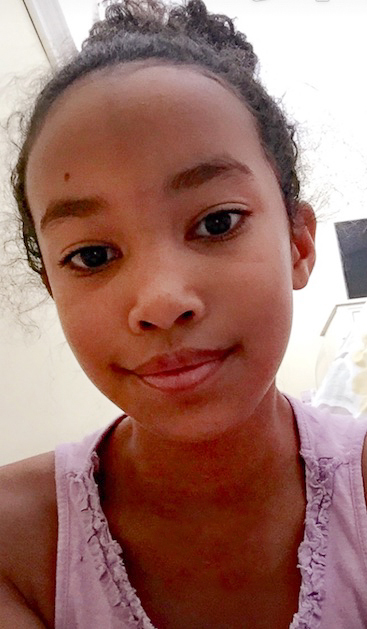
Drawing by Niamh Mulcahy, 8th grader & daughter of Jennifer Hoertz-Mulcahy and twin sister of Siobhan

Drawing by Niamh Mulcahy, 8th grader & daughter of Jennifer Hoertz-Mulcahy and twin sister of Siobhan

My name is Niamh Mulcahy.  I am 13 years old and live in Brewster New York.  I have a twin sister Siobhan, a dog named Maggie and Chickens.  I am a member of the National Junior Honor Society and a Girl Scout, working on my silver award.  I am on the field hockey team at school and my favorite club is creative writing and I like to draw and read.  My favorite books are the Harry Potter series and favorite author is J.K. Rowling.  I like Harry Potter because not only is it a great adventure and lets me use my imagination, it shows us that anyone can do anything regardless of where they come from or what other people think.  It also shows us that we should accept each other for who we are and that our talents are what make us unique.  I made this picture when I was doodling in my spare time and was inspired to share it, here, to show about diversity.  We all are different and it is important for people to accept each other.

Twins Niamh (left), & Siobhan (right) and mom/milliner/hat designer-Jennifer Hoertz-Mulcahy, whose fabulous hats can be found at: www.jenniferhoertz.com.

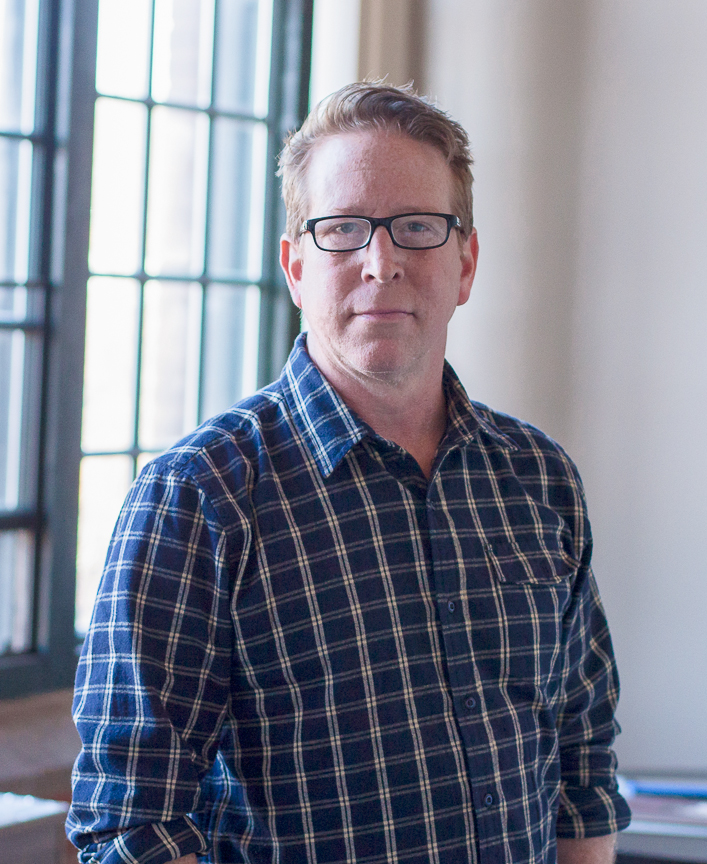
Twins Niamh (left), & Siobhan (right) and mom/milliner/hat designer-Jennifer Hoertz-Mulcahy, whose fabulous hats can be found at: www.jenniferhoertz.com.
When you show up for work in the morning and end the day as a hero.

BY: George Hamp, PIP GUEST BLOGGER

“You know what a great pilot would have done?,” Matt Damon’s airline pilot character rhetorically asks Alec Baldwin’s TV executive character about pilot-hero Sully Sullenberger. “Not hit the birds. That’s what I do every day. Not hit birds. Where’s my ticket to the Grammys?”

Hilarious. But more importantly, it’s comedy as commentary. It reminds us that showing up to do your best at your job will rarely get you a medal. You’re doing what’s expected of you and what you get paid to do. And by all accounts, that’s what Senator Elizabeth Warren does every day. (AKA - not hit the birds.)

As a senator, she has one of the lowest missed vote rates. She ranks near the top in terms of session attendance. She sits on 12 committees (and subcommittees). She is an effective senator doing what she was elected to do. The job of being a United States Senator.

Which brings us to the evening of February 7 and what should have been just another day at the office for Senator Warren. But things suddenly took a turn towards unprecedented territory.

Warren used her time to read a letter Coretta Scott King wrote in 1986 about Jeff Sessions’ racial bias. Those concerns eventually derailed Jeff Sessions’ nomination for a Federal Judge position. Senate Leader Mitch McConnell felt a line had been crossed. If he had just let it go, the letter would have reverted back to its status of forgotten history and Senator Warren’s opposition to the nomination would likely have been forgotten as well. It’s important to note that Sessions would have been confirmed no matter what was said that night.

Elizabeth Warren was not creating political theater. This was not an attempt to earn media time or to push a personal agenda. In fact, very few people were even paying attention. However, the senate is constitutionally obligated to give “advice and consent” on high-level nominees. She was doing exactly that. 

But when censored, Senator Warren used the power of social media to inform (not antagonize), and finished reading the letter just outside the senate chamber. 

Mitch McConnell also spoke.“She was warned,” he said. “She was given an explanation. Nevertheless, she persisted.”

Within 24 hours, a reported three million people were actively following the story with thousands more starting to follow by the minute. “Nevertheless, She Persisted” became a rallying cry.  The Internet was flooded with comparisons to Rosa Parks, Ruby Neil Bridges and even Darth Vader vs. Princess Leah (comedy as commentary again). A night that never should have happened became a story that is not going away.

In conversations since then, women explained to me that they have heard McConnell's language in some form or other throughout their lives. It translates to sit down. Be quiet. Know your place. And I believe that’s just plain wrong.

When Power In Place sent out a call for entries of art, thoughts, etc. about this moment in history, I sent in a couple of pieces of art. When the follow-up question was asked about what inspired me, the answer is simple.

I admire Senator Warren's persistence on all of our behalves and I’m following her example. I’m doing my job. And trying not to hit those pesky birds.

George Hamp is a painter, historian and graphic designer. He currently works as creative director for a top political persuasion mail firm. A native Floridian and life-long sailor, he channels his non-work pursuits towards advocating legislation that protects our oceans and coastlines.


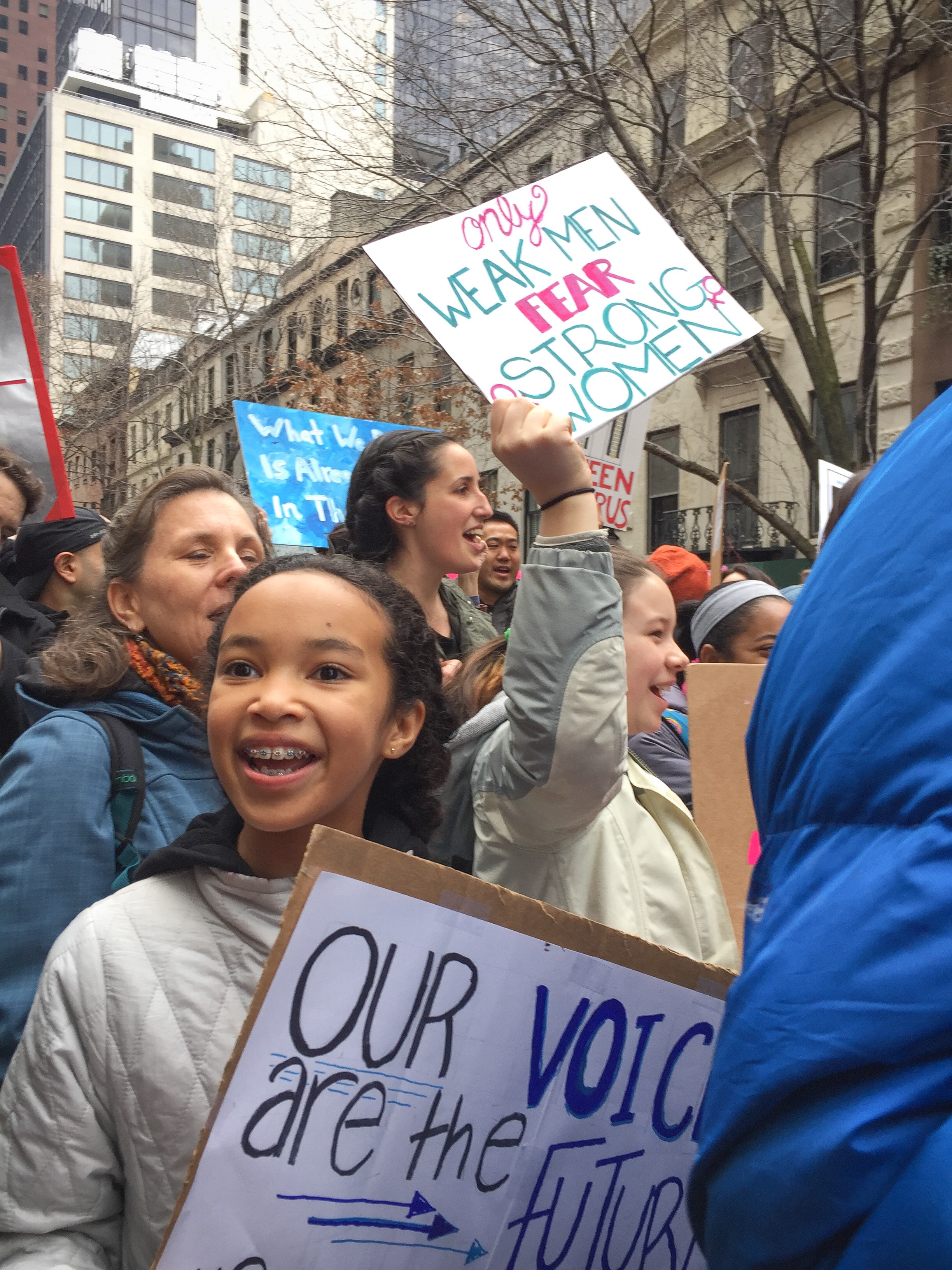
Our Voices are the Future by Amira, 12 years old

BY: AMIRA, PIP GUEST BLOGGER

I went to the Women’s March in New York City and I really enjoyed it. I went with a group from my school called “Girl Power Club”. We meet every Wednesday during lunch to watch videos about the history of feminism and current events. We then talk about our opinions and reactions. One time we listened to and wrote a statement that we would have included in the Riot grrrl manifesto. Before the march, we made signs with messages that we wanted to spread. We marched together. There were a lot of people at the march, the streets were packed, so we ended up standing on one block for an hour. I still really loved marching with my friends and seeing how many people came out to stand up for women’s rights and LGBTQ rights.

I live in Brooklyn and I’m 12 years old. I have a brother and a sister. I’m mixed (half black, quarter white, quarter Korean.) My parents are divorced, so I live with my dad, stepmom and brother half the week and live with my mom the other half. I’m with my sister everyday. I love my school and my family. I like dancing, ice skating, walking fast and listening to music.

I, Too, Shall Endure

BY: ELIZABETH REXER LEONARD, PIP GUEST BLOGGER

When I think about what it means to be a woman, a mother, a daughter a sister, I think of the immense capability for compassion and love. I think about the power of the feminine, I think about the sea and the moon. I think about Mother Earth. I draw upon the power of nature to remind me that I, too, am powerful. I, too, shall endure. I, too, shall persist in this world. Despite what comes my way, I will bear witness to things that are unjust and I will be present for my fellow human beings. I will continue to teach my children compassion, I will continue to teach them perseverance and to work towards what is just and right. In uncertain times, the good the just and the kind will persevere.

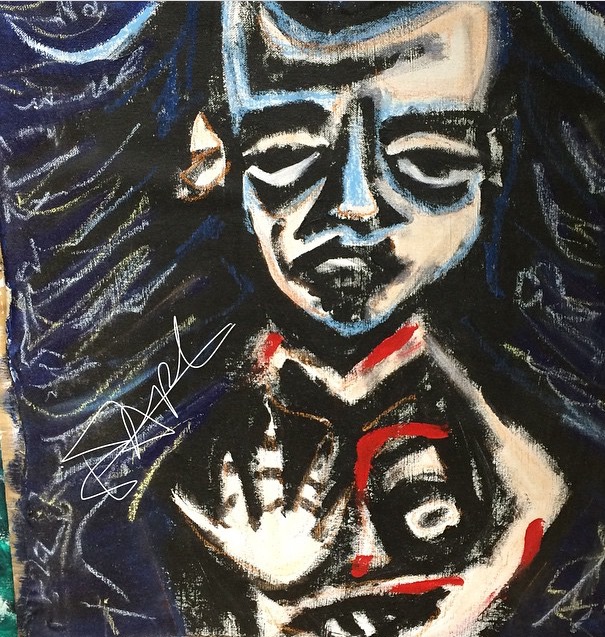
Elizabeth Rexer Leonard: mixed media on wood 2016-“Hand Eyes & Mouth"

Elizabeth Rexer Leonard: mixed media on wood 2016-“Hand Eyes & Mouth"

This painting is a response to the objectifying of women, her hand is outstretched her breasts and groin are replaced by eyes and a mouth. She more than an object, she is woman, she is strong, she will persist. ***And wear whatever she likes!

Elizabeth Rexer Leonard is a New York native. Willem deKooning, Basquiat and Georgia O’Keefe are some of her strongest influences. Elizabeth’s focuses on gender issues and social injustices in her artwork. She attended the University of Rhode Island and taught art at City Arts in Providence RI. Artist turned Farmer, she spends her days, now sowing seeds and raising her two children.


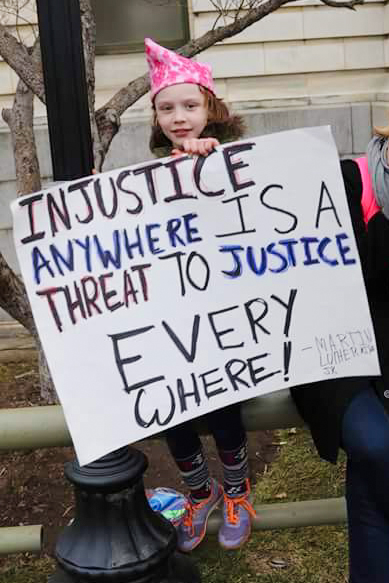
"Injustice anywhere is a threat to justice everywhere”

BY: MARGARET PRIOR ROBERTS, PIP GUEST BLOGGER

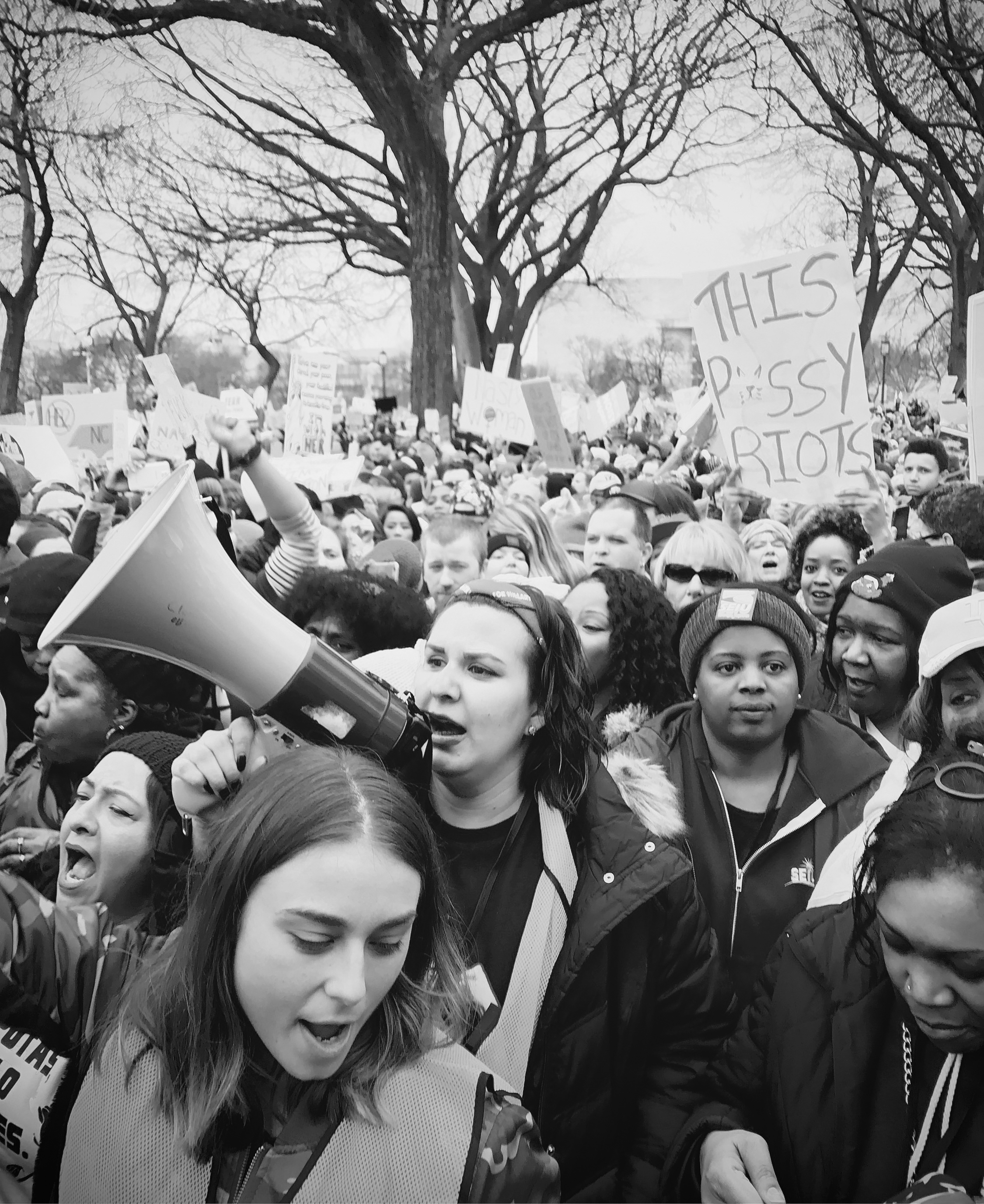
There was a lot of people, including men. It was hard to move around, and it was hard to find people because it was so crowded. Even though it was hard to move, a lot of people were having fun. There was this police officer there who was cheering everybody on. He was on a big platform, making jokes, and shouting to us. 

That’s a quote of Dr. Martin Luther King Jr.
Photo by Tiffany Jackson.

Photo by Tiffany Jackson.


All of the signs there were really creative and some of them were funny. One sign said "I was told there would be a swamp draining" and another one said "We are the daughters of the witches you forgot to burn." My cousin told me that that was her friend's sign. My sign said "Injustice anywhere is a threat to justice everywhere." That's a quote of Dr. Martin Luther King Jr.


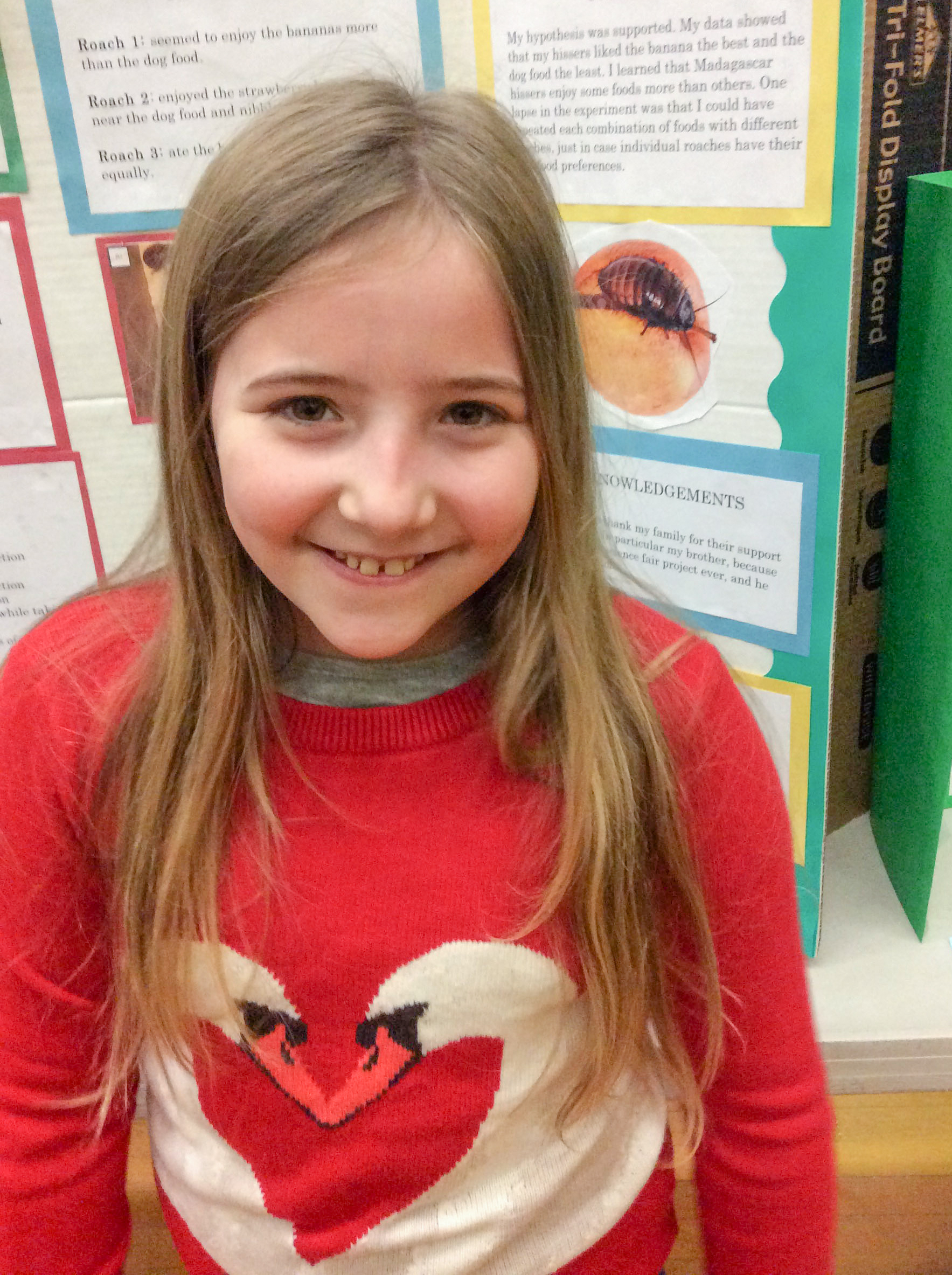
I’m in 3rd grade. I love reading, writing, monkey bars, and my two little brothers.  My favorite hobby is cutting paper into tiny shreds.

Girl Power

BY: MILLIE SCHMIDT, PIP GUEST BLOGGER

"I've never seen so many people in my life!"

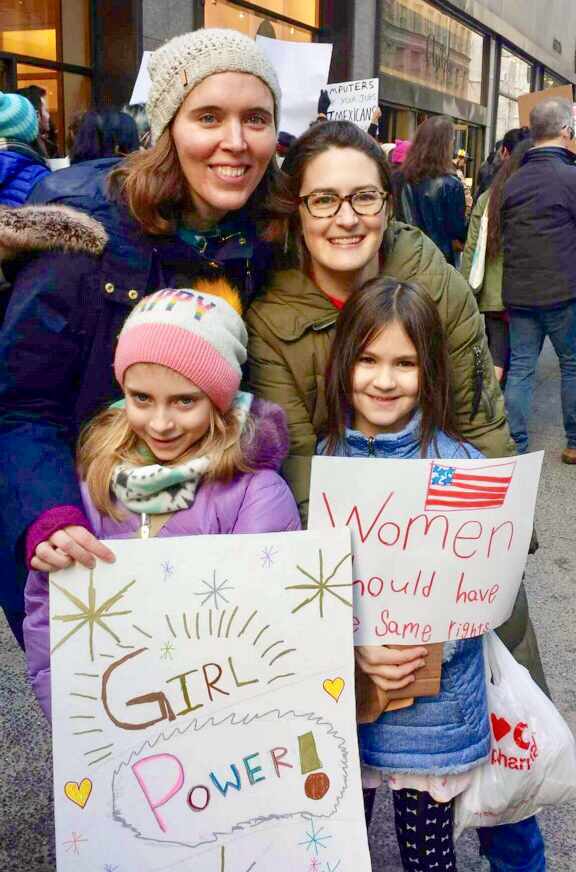
My name is Millie Schmidt and I'm seven years old. I went with my mom and some of our friends to the Women's March in NYC. We live here so we didn't have to travel, too far. There were SO many people there -- my mom had to lift me up a couple times, so I could see everyone! 

We marched because we think girls should have the same rights as everyone else. And right now Donald Trump is trying to make everyone feel like they're not equal, and that's not fair. My mom says everything is going to be okay, but that doesn't mean we shouldn't stand up for what we believe in. 

I like when we chanted "This is what democracy looks like!" People were staring at us and then they started yelling it, too!

My mom says everything is going to be okay, but that doesn’t mean we shouldn’t stand up for what we believe in.

My name is Millie and I'm 7 years old. I live in NYC with my parents & little sister, Vivian. My favorite things are reading (I love Harry Potter!), riding my scooter at the park and building forts in my room. I go to a dual language public school in Upper Manhattan and am learning lots of Spanish!

The Women’s March from a Kid’s Perspective

BY: CHEYENNE, PIP GUEST BLOGGER

The Women’s March was crowded with tons and tons of people holding up signs for woman rights, not that I could see them clearly though…

Photograph by mom, Jamina Oomen-Hajagos.

Photograph by mom, Jamina Oomen-Hajagos.

My name is Cheyenne and I’m ten years old. I attended the Women’s March to show Donald Trump that we will have our rights, whether he likes it or not. In fact, even more people came to the march in New York than to Trump’s inauguration.
 
Even though, I was a little too short to see the signs clearly, I still saw that many more people bigger than me, believe in getting those rights for women!

Since this was my first march, I was really excited to see what a march was like. I’m glad my first march was for a very important cause! Even if I was too small to see some signs and got squished around in the crowd, I was very happy, no matter what because I was supporting a major cause!


My name is Cheyenne and I’m ten years old and I live in Long Island, New York. I love all animals, but I especially love Narwhals. Many of my hobbies include: art, singing and playing the clarinet. I have one brother, named Eli. I consider myself to be a sensitive, thoughtful and creative person.


Why Not Me? My story on why I ran to be an Assembly District Delegate in 2017.

By: Grìsell Ariana Rodrìguez, SEIU-UHW, Assistant Director

Politics have always been in my DNA. I started young having political conversations at home.  Being a product of parents who escaped a civil war in Nícaragua, I was very self-aware of others’ living conditions.  As an 11 year old girl, living in California, as a first generation immigrant, I remember so clearly how the year 1994 affected me. Why 1994? Because it was the year Proposition 187 ballot initiative was passed. The ballot initiative would bar federal funding or access to social services to any undocumented Latino or anyone that looked "suspiciously illegal.”  It was widely believed that the political motivation behind the proposition was to intimidate the growing Latino population. When it passed, I was scared and fearful for my classmates, my family, friends and anyone who didn't look Caucasian.

Fast forward to 2016- I’ve had the amazing opportunity to work in the Labor Movement. For the last 8 years, I’ve always worked behind the scenes on every election since 2008: turning out our members, building up volunteers, and organizing Get Out the Vote (GOTV) for the campaigns we worked on.  In 2013, I had the opportunity to lead the first enrollment event in Southern California for the Affordable Care Act. It was 100% volunteer driven and we continued to enroll over 20,000 Californians over the next 2 years.

2016 started out like a regular election year, my job was to build up regional teams of leaders to participate in the primaries and the general election cycle.  My other responsibility, as the Secretary Treasurer for the Latino Caucus, was to get out the vote. During the week, I spent all of October turning out members to phone banks in Los Angeles.  Then I’d hop on a bus to Las Vegas, Nevada, in order to secure the Latino Vote for Hillary Clinton and Catherine Cortez Masto (the 1st Latína US Senator).

The following day after the election, I vowed to do more, not just for me, but for all the children in Los Angeles County

 The election season was exciting and come Election Day, Get Out the Vote (GOTV) day was seamless as ever in Nevada . On the bus back home, reality hit.  As an organizer, I began to do the numbers and it hit me for a second that everything that was at stake might be compromised.  Then I received a call from my 11 year old daughter, panicking and asking if we were going to be deported. In that moment, 1994 was happening all over again, but this time my daughter was the little girl. We all know what happened on November 9th.  To be honest, I felt so sickened, just like the day my ex-husband walked out on me with 3 children.

The following day after the election, I vowed to do more, not just for me, but for all the children in Los Angeles County, who woke up in fear due to Donald Trump’s hateful rhetoric. That’s why, when I became aware of the Assembly District Delegate Elections, I didn’t think twice about running.  I had more than enough experience behind the scenes to be qualified.  I wanted my district to be reflective of its constituents, with more representation by minority women. On January 7th, I was elected as an official delegate of the 36th District in California.


Grisell A Rodriguez is a social activist in the labor movement and has the privilege to build leadership teams across California that passionately engage in social justice movements. She is currently seeking a post-graduate degree in Nonprofit Management and Leadership. She represents constituents of the 36th Assembly District in California, all the while, raising 3 independent, fearless thinkers, who know more about politics, than your average adult.


I Never Wanted to be a Princess

By: Sara Boivin, art historian

I never wanted to a be a princess. I didn’t host imaginary tea parties. I didn’t bottle-feed baby dolls. I didn’t own a Barbie (not one). I never liked pink, never asked for a crown or tiara. I was forced to wear bows and ribbons in my braids. In fact, I was forced to wear braids. You know the kind…hair parted in the middle, mind-numbingly secured at the scalp, and again at the tail with bands bearing large plastic balls that could take out a tooth if you whipped them around too fast? Yeah, that kind. But my long thick, dark brown braids served me one incredible purpose…to have my mother twist them and pin them into “Leia buns.” This was a common request after my first exposure to the Star Wars series, which admittedly was the Empire Strikes Back, released in 1980, as I was only three when Star Wars IV arrived in theaters. I saw it at the end of June in the old movie house in Lake Placid, NY and all the way back to our camp, I shot my imaginary blasters through the back windshield at various Imperial Starfighters, closely resembling old Ford trucks and wood-paneled station wagons.

Even at six years old, I knew the Star Wars experience was bigger-than-life because I felt enveloped and invested in that world. I was hooked. Lucas got me young. And so, I fell in love for the first time that day; with the act of movie-going, embracing two hours of escape, the seemingly endless creativity alien life-forms provided which satisfied my wild imagination, and with Leia. At the time, I was too young to know Princess Leia was a role model. That is only a revelation that comes with maturity, but for the first time in my young life I was more interested with what was on screen than which candy I had access to. Leia first appears in A New Hope via hologram, clad in white, projected by a droid while unveiling a mystery with an urgency I didn’t quite comprehend. However, Leia made me believe her message was very, very important and that her role mattered. So Leia, in essence, goes on to carry the entire saga even when she wasn’t on screen. But when she was present the character was complicated; often soft and caring, coupled with a sharp wit and sharper tongue. She could shoot a pistol, sling personal insults at ruthless dictators, and continue to fight for her personal beliefs and the shared principles of many being attacked by a few.

Like I said, I never wanted to be a princess at a tea party, but a princess who fights in a rebellion and becomes a general shaping the future of the cosmos?
Right on.

Now, the fact that Stars Wars IV, V, VI were considered unacclaimed movies with less than stellar acting and character development is not lost on me today but at six, who cares? I reveled in watching a young woman fight alongside men, garner respect amongst her counterparts as she built a galactic alliance to fight evil. She inspired people around her to stand up for what was right and good, and risk everything to shape a better future throughout the universe. And she wore cool-ass braids while doing it!

And as the Lucas, turned Disney formula continues, the franchise is still empowering women and girls to save the universe as seen in The Force Awakens to Rogue One. Rogue One had me on the edge of my seat as I watched yet another Star Wars heroine emerge, although quickly fade from the storyline only to find out actress Carrie Fischer had died while I was in the theatre. My two hours of escape were over and reality slapped me, and all Star Wars lovers in the face. Ms. Fischer’s death is a sad loss for the movie studio, a sad loss for her cadre of fans, and an even sadder loss for her surviving real family. Ms. Fischer had done the seemingly impossible for women in Hollywood by returning after almost 40 years to reprise that same role…well, sort of. Leia’s character, although brief on screen-time in The Force Awakens came back better, more mature, tougher, and even more beautiful in her confidence. What a pleasure it has been to watch Leia grow from a young princess with a purpose, to a general in the Resistance. Frankly I was looking forward to seeing how Ms. Fischer would bring General Organa’s leadership to life and be inspired by a seasoned role model fighting the good fight all over again. Because like I said, I never wanted to be a princess at a tea party, but a princess who fights in a rebellion and becomes a general shaping the future of the cosmos? Right on.

So tonight, if my hair was long enough, I’d whip up some Leia-style braids and wear them around proudly (in the privacy of my own home). But alas, my hair is too short. So instead, I’ll go outside into the frosty air, look up into the clear night sky, spy the brightest star I can find, and name it “Leia Organa” and wish both the character and the actress who brought her to life, a deep and peaceful sleep in a galaxy, far, far away.

Sarabio01.jpg


Sara Boivin lives in Saratoga Springs, NY and is the curator of the Yates Gallery at Siena College, where she is currently collaborating and leading the efforts to repatriate ancient artifacts to their country of origin. Committed to the arts, Sara is also a painter working to complete a new body of work for exhibition. In addition, she cares deeply about politics and the future of her community and has been involved in local grass roots movements to effect change where she lives.

Modeling Our Mission—Anita Hill Speaks Out

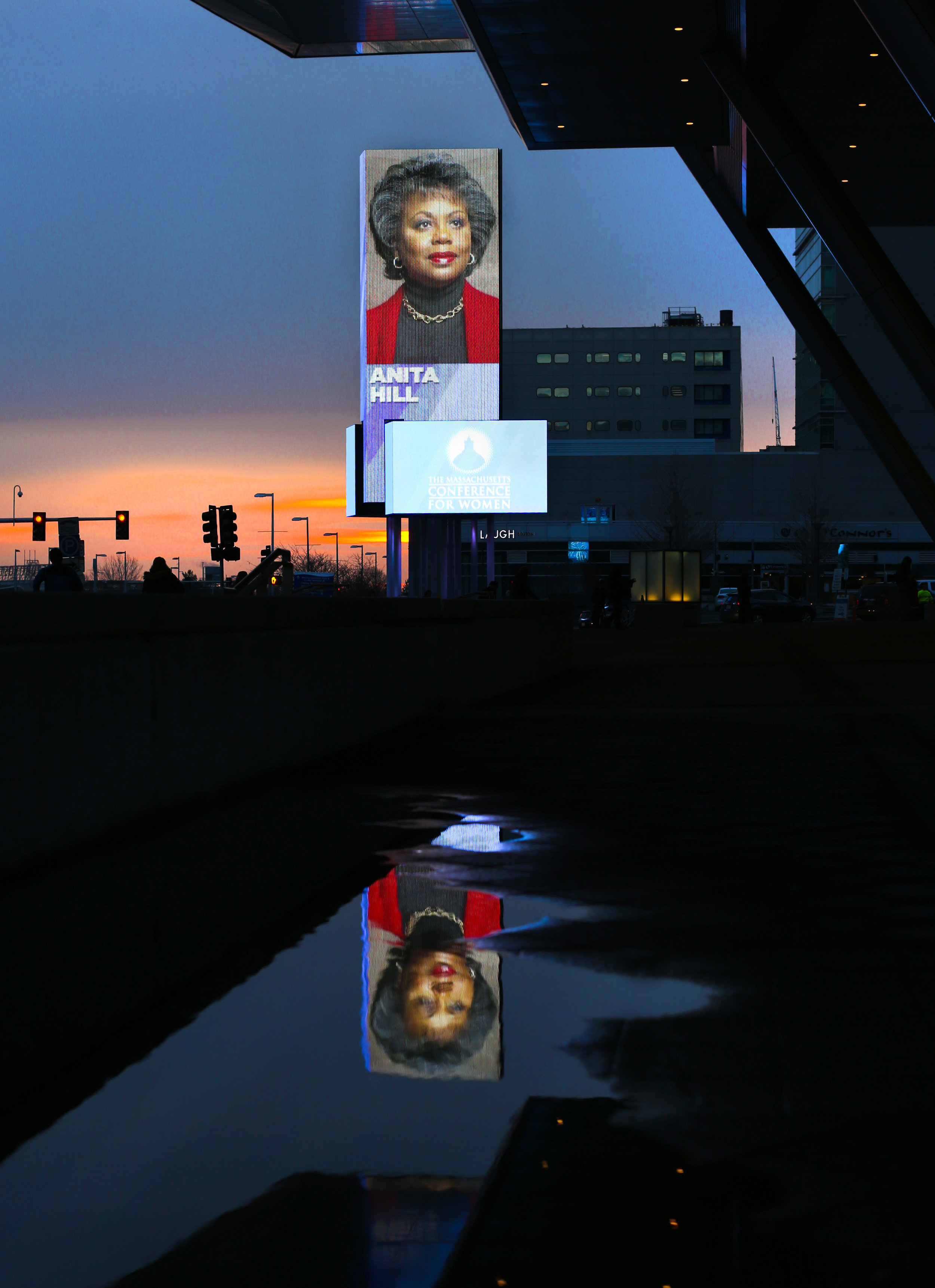
While interviewing women leaders for Power in Place (PiP), I’ve asked my subjects to identify role models in their lives. Many answers have been deeply personal, like pointing to one’s grandmother; others have looked up to sports figures, like Billy Jean King; or others revered social justice activists such as Dr. Martin Luther King.  As I reflect upon my own journey  two years into my project (feeling myself to be a wiser and more confident woman), I regard Professor Anita Hill as my inspiration since she is an unflinching advocate for all women.  So I was especially honored to attend her keynote presentation at this year’s sold-out Massachusetts Conference for Women.

Photograph by Katrina Hajagos.

Photograph by Katrina Hajagos.

Most of us are passive witnesses and reluctant participants in a greater narrative.  Others are thrust into history, not necessarily by their own designs.  These select few, such as Anita Hill, are presented with great life challenges and because of their strong moral fiber they’re able to meet these obstacles head-on and emerge stronger.  As a result, they become our paragons of leadership.   

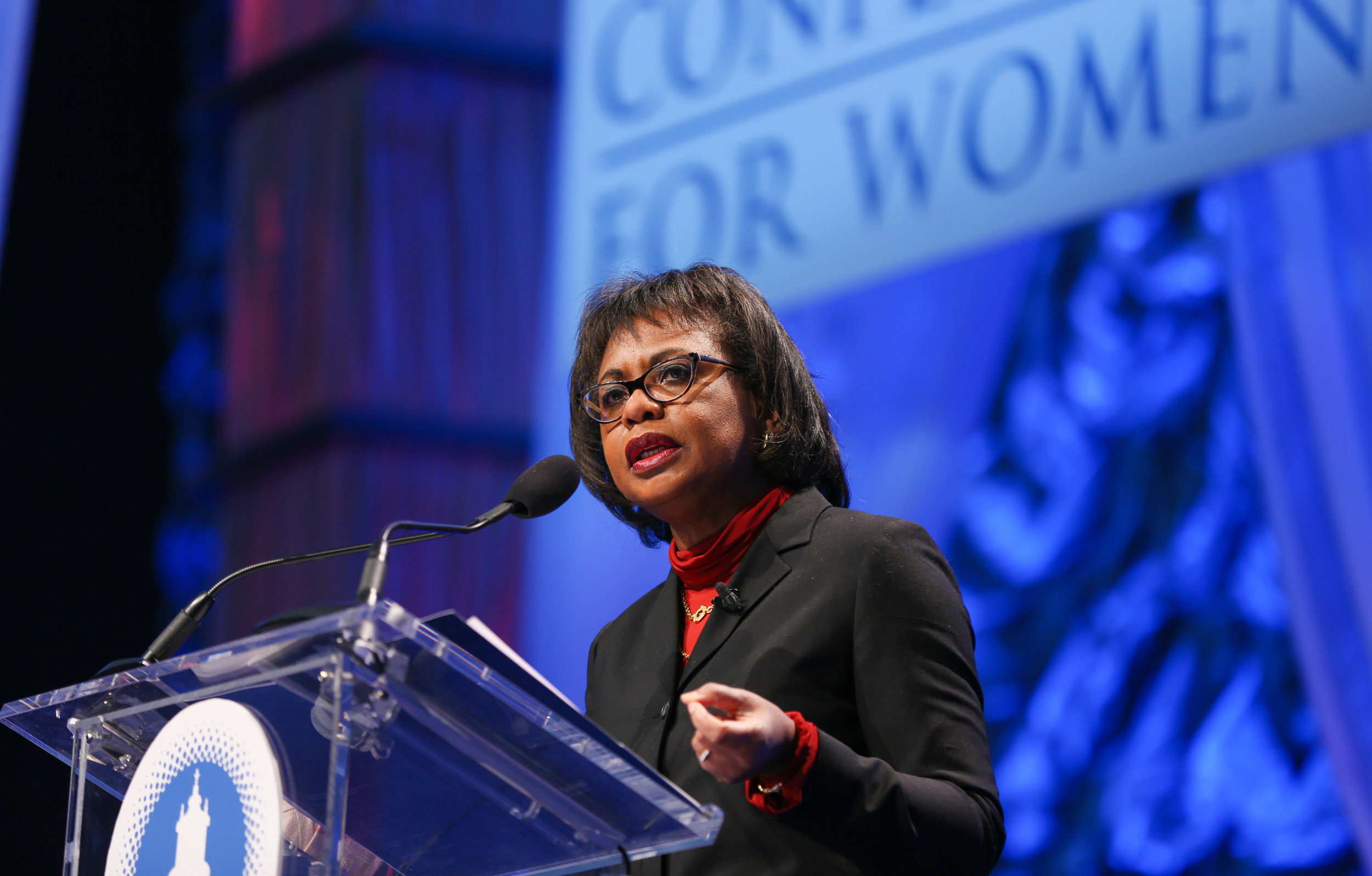
 In 1991, Professor Hill was at the center of a very intense, deeply political controversy around the Clarence Thomas Supreme Court nomination.  It wasn’t her intention to be the middle of the debate.  She was simply doing her duty by honestly answering the questions posed by the vetting committee.  Professor Hill clearly recounted the workplace sexual harassment she suffered from her boss, Clarence Thomas.  She testified that Thomas created an unsafe, uncomfortable and demeaning work atmosphere.  Her allegations seriously questioned the fitness of such a man to be a Supreme Court judge.   As she put it during her recent speech to 11,000 women at the Massachusetts Conference for Women, what worried her was “once confirmed Thomas would be sitting in judgment of harassment cases.  The matter (of his sexual predation) was not one of my civil rights, but access to equal justice for all was at stake.”

We must raise our voices, just like we did 25 years ago to say ‘enough is enough’

Unfortunately, Washington DC is extremely partisan, so her truth, as she lived it, wasn’t taken at face value. Instead she was subjected to extraordinary scrutiny by the all-male senate judicial committee.  In the opinion of many, requiring her to repeatedly describe the verbal sexual humiliations she endured turned the Thomas confirmation hearing into an assessment of her character, not the character of the nominee.  As history invariably played out, her testimony was discredited and Thomas was confirmed.   

The aftermath of the hearings saw many fallouts.  For Anita, she was terrorized by bomb and death threats.  Viable packages of harm were delivered to her doorstep.  Amidst these declarations of hate, however, thousands of letters from ordinary Americans expressing support were addressed to her.  Women came forward and shared their own stories of sexual harassment and brutality.  The correspondences were filled with hope, inspiration, and empowerment. 

On a national level, women emerged from the shadows of shame and fear.  Reported cases of sexual assault and intimidation to the EEOC doubled in just two years.   Women took note of the deplorable treatment of Anita in our seat of government.  They felt their voices and values weren’t being represented.  The year 1992 ushered in the “Year of the Woman.”  Record numbers of women ran for political office and won.  That election cycle saw the largest percentage of women entering Congress in history.

Photograph by Katrina Hajagos.

Photograph by Katrina Hajagos.

Even though Anita Hill didn’t necessarily choose this role of being a feminist symbol who holds truth to power, she has inhabited it with boundless energy, grace and long-term dedication.  She knows that harassment is not just about sex, but it’s about control and power and the abuse of it.  She recognizes the deep connection between sexual misconduct and the wider issue of gender equality.  “Harassment is not just some isolated thing.  It typically occurs in combination with other forms of harassment, like pay discrimination, like (workplace) assignment disparities, like bias reviews, and when women are passed over for promotion.”

Today, Professor Hill’s advocacy has given a voice to so many vulnerable women who have been dismissed by the main-stream power structure.  College women are uniting and challenging university policies in regard to how they react to allegations of sexual harassment and assault. However, noting the recent political climate, she challenged us to remember, “Now is the time for us to draw upon our most courageous selves, so when we look upon a 7th grade class, we can tell them, we did everything we could in our power to end sexual harassment, to end sexual assault, and end gender discrimination in their lifetime, so the next generation does not live through what we and our mothers lived through.”  She continued her emphasis: “We must share our stories with daughters and sons.  We must raise our voices in our workplaces and we must make our system work for us.”

Thank you, Anita for being an unwavering advocate for all women.  We owe you a debt of gratitude for your long-term dedication to women’s rights.  Going forward, I will always hold your call to action as a guiding light: “We must raise our voices, just like we did 25 years ago to say ‘enough is enough’” and fight for gender parity during these times of uncertainty.